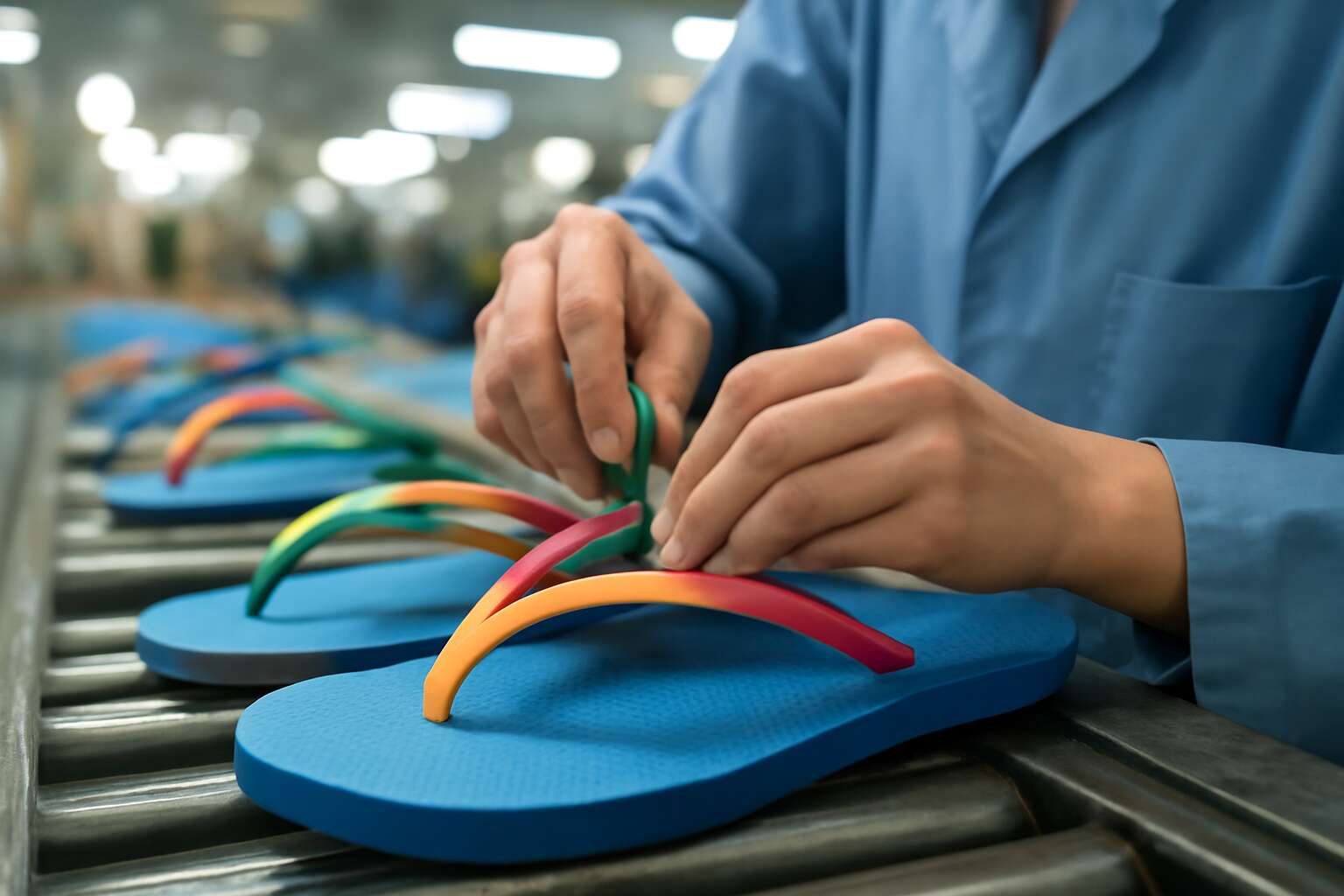
Overview of Flip Flop Manufacturing
Materials and Components
Footwear wonder in a sunny workshop—understanding how flip flops are made reveals a tale of simple materials, clever molds, and careful bonding.
In this overview, the backbone lies in materials that cushion, grip, and endure South African beach days. The core components and materials include:
- EVA foam outsole for light, cushioned comfort
- Flexible rubber or EVA midsole for durability
- Vinyl or fabric straps with stitching or durable adhesives
- Polyurethane or rubber thong insert for secure fit
- Anti-slip tread and water-friendly coatings
Factories balance pressure, heat, and adhesives to finalize the sinuous shape that travels from Cape Town pavements to sunlight-drenched dunes, revealing the craft behind every comfortable step.
Manufacturing Processes
Across the globe, more than 2 billion pairs of flip flops tread beaches each year, a testament to simple engineering turning sun‑kissed minutes into lasting comfort. This is how flip flops are made, not as a mystery but as a choreography of heat, pressure, and precision.
The process proceeds in a measured sequence, guiding each pair from raw idea to wearable artifact:
- Calendering foams into a flexible outsole base
- Shaping the sole with moulds and heat
- Attaching straps through adhesives and stitching
- Quality checks and trims to ensure a perfect fit
From Cape Town’s coastline to the inland resorts, factories weave these steps with a rhythm that feels almost mythical, turning heat into comfort under the SA sun!
Quality Assurance and Standards
Across South Africa and beyond, more than 2 billion pairs touch beaches each year; quality is the quiet heartbeat of that daily ritual. This overview of how flip flops are made threads its way through the idea of assurance, not fantasy—an intimate choreography of standards meeting craft.
Standards like ISO 9001 for management systems, ISO 14001 for environmental stewardship, and ISO 45001 for health and safety guide audits, while local SABS marks ensure conformity within South Africa. Traceability, batch documentation, and supplier qualifications track each sandal’s journey, guaranteeing consistent performance and safety.
- Raw material verification and supplier qualification on arrival
- Adhesive bonding quality with pull and peel tests
- Dimensional tolerances, outsole integrity, and flexibility
- End-of-line inspection and packaging conformity
This disciplined choreography ensures that when a foot slips into a pair, the science behind the comfort remains invisible yet unwavering.
Sustainability and Innovation
Green glow warms the factory floor as we reimagine a familiar thread. Across the industry, innovations have slashed virgin material use by up to 20% in recent years. In South Africa, sustainable craftsmanship meets bold experimentation, turning waste streams into new comfort. When we ask how flip flops are made, the answer is a quiet symphony of waste repurposed and water saved. Small innovations ripple from bin to beach, proving that durability can ride a kinder footprint.
- Biobased foams and recycled rubber blends reduce virgin material use.
- Water-based adhesives that cut emissions and odor.
- Local partnerships for reclaimed textile straps and circularity.
This approach fuses artistry with accountability, ensuring coastal communities feel the breeze of progress without compromise. The journey of sustainability and innovation continues to ripple beyond the sandal, inviting curious minds to witness the quiet magic behind every stride.



0 Comments