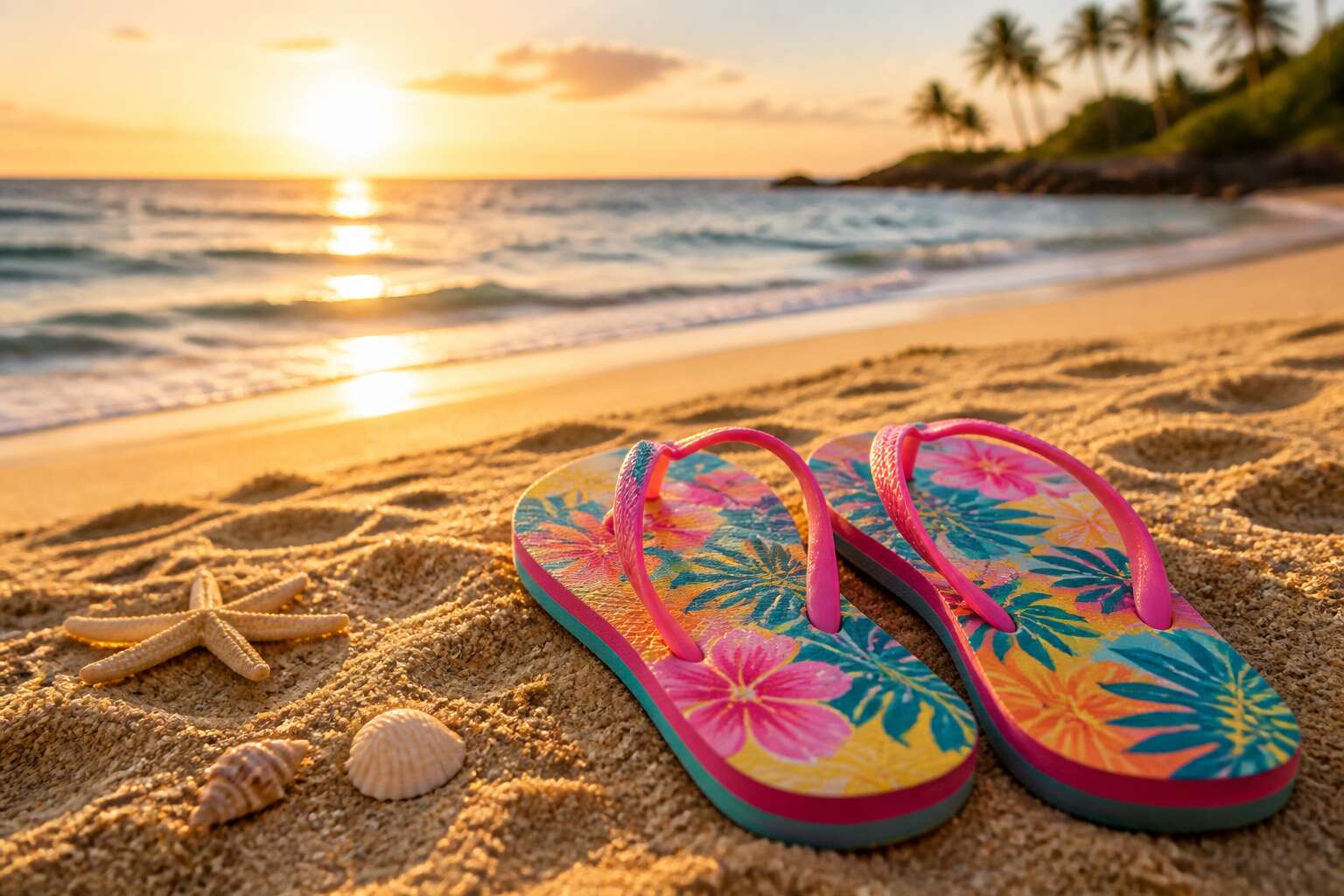
Understanding Flip Flops as Footwear
The average South African home holds at least one pair of flip flops, often without anyone recalling where they came from. Yet flip flops, what is the meaning behind their stubborn presence? I have watched a single pair outlast three summers of punishing heat. They refuse to break. It is almost as if they wait for a sign to finally give up.
The sound is unmistakable! A sharp slap, then a soft slap, repeating with every stride. The name simply describes the noise. But the noise carries something older. It is a rhythm that has paced through coastlines for decades.
- They do not ask for footwear polish
- They do not care about matching outfits
- They do not fear wet grass
Something uncanny hides in their simplicity. A flip flop is machinery with zero moving parts, yet it moves with you perfectly. It is the nearest thing to walking barefoot without touching the ground. Maybe that is their true magic.
The Symbolic and Cultural Significance of Flip Flops
In South Africa, the humble slip slop tells a story of duality. For some, it is a symbol of domestic struggle, the worn rubber of a domestic worker speaking to miles of unpaid labor. For others, the sharp snap of a new pair on the pavement signals the start of a weekend holiday. The question of flip flops what is the meaning often hinges on perspective. Yet, this footwear is our great unifier.
I have seen three generations of a family on a beach in KwaZulu-Natal, all wearing the same style, yet wearing completely different life experiences. It is a relic of the Riviera, a servant’s necessity, and a surfer’s uniform all at once.
Metaphorical and Idiomatic Meanings of Flip Flop
When someone says “flip flop,” they rarely mean the beach shoe. The phrase has become a shorthand for indecision and reversal of stance. In politics, a candidate who flip flops changes position based on polls, which voters often distrust. I look at common idiomatic uses to understand this label.
- A leader who flip flops on tax policy loses credibility.
- Relationships suffer when promises flip flop overnight.
- Business strategies that flip flop confuse clients.
These phrases share a core judgment: a flip flop signals instability of character. For South Africans, the term appears in political commentary, where conflicting statements invite sharp scrutiny. Ultimately, flip flops what is the meaning depends on context, but the idiomatic core stays constant: changing course too often attracts suspicion. That is harsh, but it is wrenching to watch!
Flip Flops in Fashion, Society, and the Environment
Every summer, South Africans slide into a pair of rubber soles without a second thought. Ask about flip flops what is the meaning, and the answers vary wildly. For some, they are pure freedom. For others, they are a marker of circumstance.
Fashion has absorbed them into high-heeled versions and designer collaborations. Society still debates whether they belong in restaurants or offices. The environmental cost requires equal attention. Cheap plastic versions break within months, yet they persist in landfills for generations.
Consider how these shoes function across different spaces:
- A beach essential that shields feet from scorching sand
- A modest footwear choice for quick errands
- An unintended symbol in dress code debates
The decision to wear them carries quiet weight. A pair of flips flops can say more about your day than your words ever will. The meaning is personal, and it evolves with every footprint left in the sand.
Linguistic Evolution and Usage of the Term
The term “flip flops” carries a fascinating weight. For most of the world, it is a simple description of the sandal worn between the toes. You say the words, and people instantly picture the iconic rubber sole and the distinctive slapping sound. But the phrase has a deeper, more contested meaning depending on where you stand on the globe. In many places, the name is purely functional. In others, it carries a subtle social history.
South Africa offers a unique perspective on this debate. Here, the question of “flip flops what is the meaning” often gets a different answer than you might expect. While the English term is widely understood, it is rarely the first word that leaves a local’s mouth. The journey of the word is a lesson in how language adapts to its environment. It shows how a product can be rebranded by the culture that wears it.
Consider the linguistic branches of the family tree:
– The generic “flip flops” is recognized but sounds slightly foreign to older ears.
– The Afrikaans “plakkies” is warm, familiar, and used across demographics.
– The Zulu “imbadada” ties the sandal to specific historical contexts and rural life.
The evolution here is stark. The American term focuses on the noise the shoe makes. The South African terms often focus on the flatness of the shoe or the act of wearing it. This shift in focus changes the entire identity of the object. It moves from a casual summer accessory to a versatile, everyday staple. So, when you ask about the meaning, you are really asking about history, climate, and the way people live. The answer changes with every accent, proving that the true definition of a flip flop is often found in the local slang that outlives the original trade name.


0 Comments