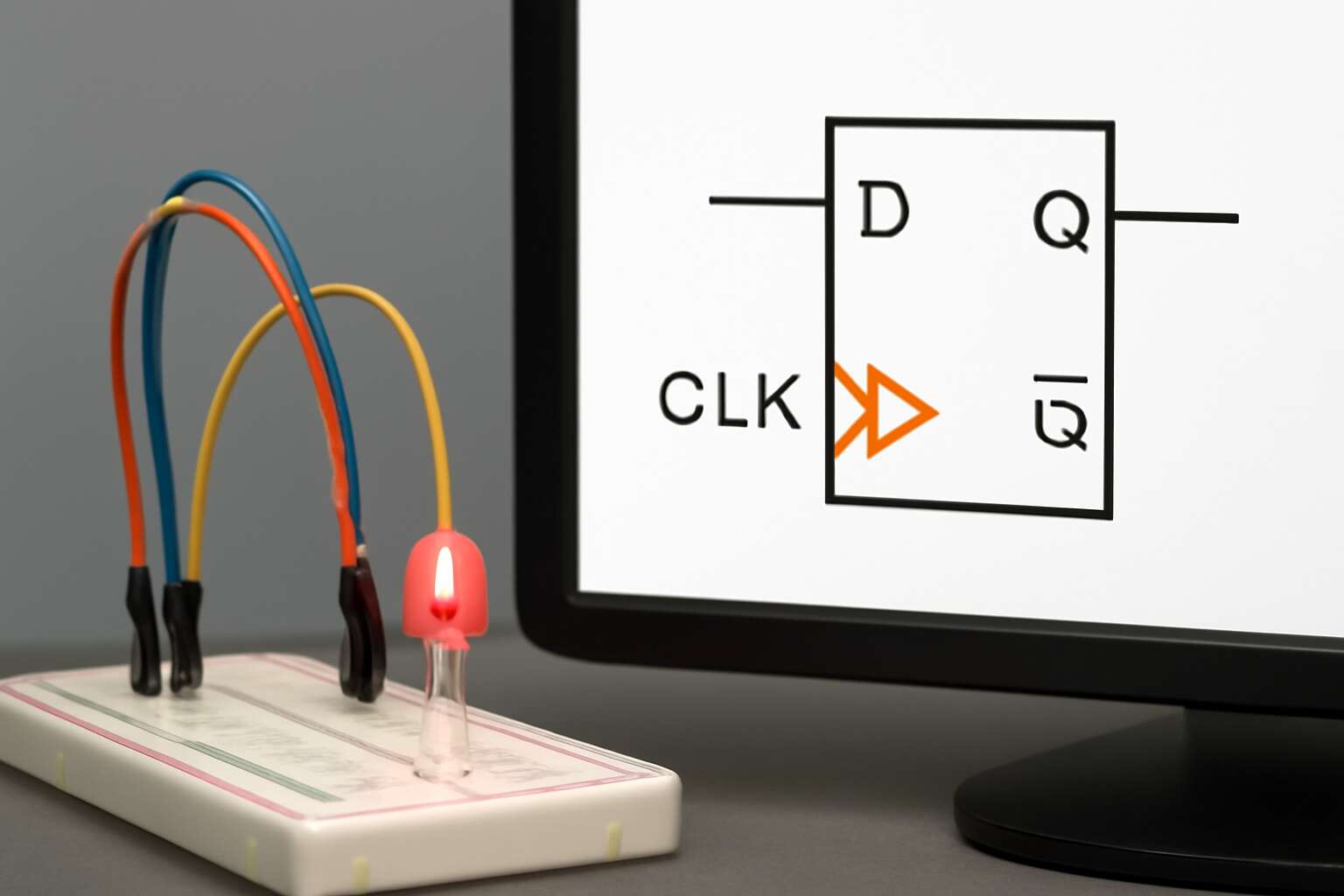
Edge triggered flip flop guide
Foundations of flip flop technology
A recent survey found that 47% of engineers say the clock edge dictates reliability more than any other parameter in digital design. Edge triggered flip flop fundamentals pulse at the boundary between logic states, where timing clarity matters most.
Edge-triggered devices respond to transitions, not steady levels. A negative edge triggered flip flop captures data when the clock falls from high to low, locking it as the edge passes. That falling-edge discipline helps tame jitter and clock skew in busy systems.
- Responds to the falling edge of the clock
- Reduces metastability in high-speed pipelines
- Pairs with other edge types in mixed designs
If you ask which flip flops are negative edge triggered, you’ll find their strength in clock discipline and edge-sensitive latching. They lend predictability to digital networks, including environments common in South Africa’s tech landscape.
What makes a flip flop edge triggered
In the orchestra of chips, timing is the conductor. A recent survey shows 47% of engineers say the clock edge dictates reliability more than any other parameter. Edge-triggered devices respond to transitions at the boundary of logic states, and this is where timing clarity matters most. When you ask which flip flops are negative edge triggered, you discover they latch on the clock’s fall, sealing data as the edge passes.
- They latch on the falling edge, not the rising edge.
- They tame jitter and clock skew by a single transition window.
- They pair well with other edge types in mixed designs.
This disciplined timing brings quiet predictability to digital networks across South Africa’s growing tech landscape, where edges of time decide the pace of innovation.
Negative edge triggering in common flip flop types
Across South Africa’s growing tech labs, the clock governs progress. A recent survey shows 47% of engineers say the clock edge dictates reliability more than any other parameter. Negative-edge designs latch data on the clock’s fall, sealing information as the edge passes.
Engineers often ask, ‘which flip flops are negative edge triggered’ when selecting timing paths. In practical terms, the D-type, JK-type, and T-type flip-flops have negative-edge variants that capture on the fall, offering predictable timing windows for critical pipelines.
- D flip-flop — negative-edge version holds new data when the clock falls
- JK flip-flop — negative-edge triggered to avoid glitches during transitions
- T flip-flop — negative-edge version toggles on the falling edge
In this quiet timing discipline, design teams in SA find a steadier rhythm for digital networks, where the edge decides cadence and reliability.
Practical considerations and applications
Across South Africa’s growing tech labs, the clock is the conductor of the digital orchestra. In these halls, reliability leans on the edge as much as on the code itself. Readers often ask which flip flops are negative edge triggered—an inquiry that invites a tour through a disciplined timing world where data latches on the clock’s fall.
Negative-edge designs offer a predictable window for pipelines, especially when the rest of the system races on the rising edge. D-type, JK-type, and T-type flip-flops each have subtle negative-edge variants that seal data as the clock slips downward, avoiding mid-edge surprises and reducing glitches in chatter-filled environments.
- Clock skew tolerance and clean setup/hold margins
- Consistent reset behavior and initialization across stages
- Trade-offs between power, area, and timing budgets in SA-based boards
In practical terms, this edge-driven discipline helps teams choreograph digital networks with confidence, turning timing into a narrative rather than a gamble.




0 Comments