Core Concepts of Flip Flops in Electrical Engineering
What is a Flip Flop?
South Africa’s labs pulse with the quiet magic of flip flops electrical engineering. A flip flop is a bistable device that stores one bit, changing state only when a clock edge arrives. In today’s chips, billions of these tiny sentinels choreograph decisions across cores, turning pulses into memory and myth into measurable motion. The result is a dependable heartbeat for digital systems, even when weather, weariness, or power flickers threaten stability!
Its core behavior centers on state, clock, and timing. Key concepts include:
- One-bit memory stored and retrievable on a clock edge
- Edge-triggered operation for synchronous control
- Timing discipline: setup and hold limits to avoid glitches
In practice, these moments stitch data into orderly sequences across SA-designed boards and global systems.
flip flops electrical engineering fundamentals
Across today’s silicon stacks, billions of flip flops electrical engineering exchanges happen inside every clock cycle, turning binary whispers into bold decisions. Core concepts focus on preserving a bit, updating only when the clock tells them to, and resisting timing goblins that misread the next state.
Different families extend that idea. D-type devices chase stable input on a rising edge, JK toggles brains when both inputs flip, and T-flops simplify repetitive counting. To visualize, consider:
- D-type for clean data capture
- JK and T for flexible state machines
On South African boards and in global systems, these decisions stitch together registers, counters, and pipelines. Proper understanding safeguards metastability, ensures reliable clock domain boundaries, and keeps digital routines humming even when the power sniffs at the edges.
Flip Flops and State Machines
On today’s silicon, flip flops electrical engineering act like tiny, patient librarians: they remember a bit, wait for the clock, then publish the next line of truth. The clock tells them when to update; the data input keeps the story straight; and tight timing margins decide whether a change is safe or wakes up the goblins of metastability.
- Edge alignment and setup/hold budgets
- Metastability risks and synchronization strategies
- Clock-domain crossing techniques
Across South Africa’s boards and global systems, these devices stitch together registers, counters, and pipelines. The goal isn’t drama but predictable state machines that survive jitter, skew, and power droop.
Mastering flip flops turns nervous timing into steady, maintainable logic in South African and international contexts.
Boolean Logic and Timing in Flip Flops
Timing is king in the silicon theater, and a single clock edge decides which bit becomes the next truth. In this core, Boolean logic collides with stubborn real-world timing, turning a simple register into a patient gatekeeper. These ideas anchor flip flops electrical engineering and give designers in South Africa—and beyond—a sturdy backbone when jitter gnaws at margins.
Key ideas include:
- Edge-triggered operation: the clock edge decides when the data snapshot happens.
- Setup and hold: margins that keep the data stable long enough to publish the next state.
- Clock-to-q latency and metastability considerations that force careful synchronization across domains.
Whether tracing pipelines in Pretoria or patching a global data path, the core concepts remain the same: clean logic, strict timing, and a healthy respect for edge cases that keep systems honest.
Edge-triggered vs Level-triggered Flip Flops
Across South Africa’s data centers, a single clock edge decides the next state in a heartbeat. Edge-triggered flip flops snapshot data the moment the edge arrives, turning timing into a steadfast gatekeeper that tames jitter and keeps pipelines honest.
Two core paths compete in practice:
- Edge-triggered: snapshots on a clock edge.
- Level-triggered: sensitive during a clock window, not just the edge.
- Trade-offs: setup/hold margins, clock-to-q latency, and metastability considerations.
In the realm of flip flops electrical engineering, clean logic and careful synchronization across domains matter; this is where patience and precision meet the rhythm of the clock.
Historical milestones in flip flop design
In South Africa’s data centers, precision clocks govern billions of bits each millisecond—the kind of discipline that makes flip flops electrical engineering sing. A single edge decides the next state, a heartbeat that tames jitter and keeps pipelines honest.
Milestones forged the core of flip-flop history:
- SR latch laid memory groundwork in the 1950s
- JK flip-flop reframed unpredictability into practical toggling
- D flip-flop streamlined reliable sampling for sequential logic
- CMOS and TTL families shaped dense, low-power implementations
These milestones trace a lineage from abstract logic to real-world silicon. Each step tightened timing budgets and seeded dependable pipelines that engineers rely on today.
Types and Architectures of Flip Flops
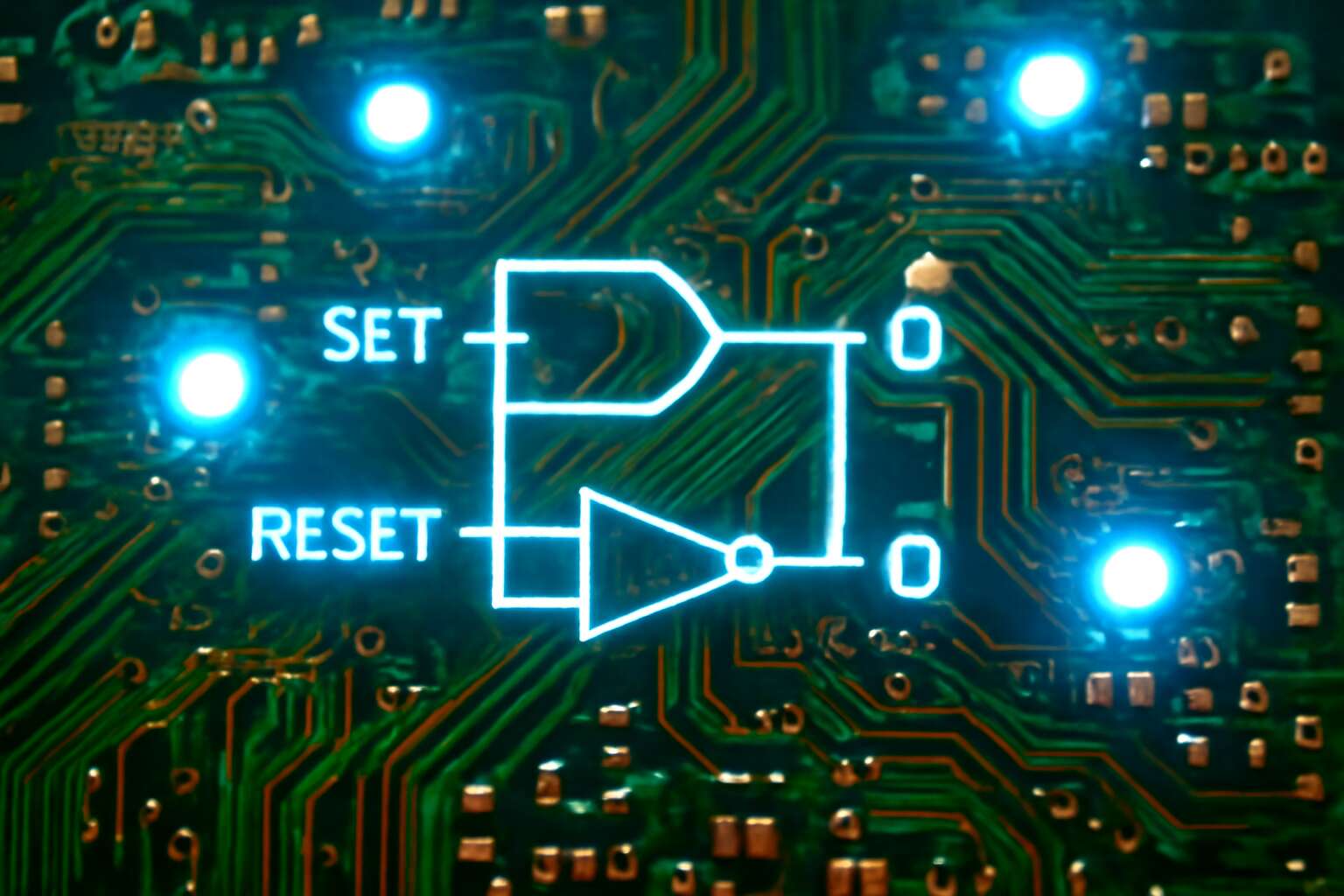
SR Flip-Flop Basics
In South Africa’s evolving tech scene, flip flops electrical engineering isn’t about sandals—it’s the quiet workhorse behind memory in digital systems. An SR flip-flop basics centers on two cross-connected storage elements that hold a bit until a set or reset input changes it. This family underpins simple memory, state machines, and debounced input handling in embedded projects across industries.
Here are key SR-based architectures you’ll meet in designs and labs:
- Asynchronous SR latch
- Clocked SR flip-flop
- Gated SR latch
- Master-slave SR flip-flop
Choosing among them depends on timing, hazard avoidance, and the intended signalling environment in SA manufacturing, educational institutions, and startups that rely on robust digital timing—and the right SR architecture keeps systems predictable under real-world conditions.
D Flip-Flop: Edge-Triggered Design
‘Timing is everything,’ the clock seems to whisper, and in flip flops electrical engineering this is not metaphor—it is hardware. The D flip-flop, edge-triggered, captures D on a clock edge and holds it until the next edge. It’s the quiet anchor behind memory and state in digital systems.
- Edge-triggered D flip-flop
- Master-slave D flip-flop
Two core architectures you’ll encounter in D-type flip-flops include these reliable configurations and their subtle trade-offs.
These designs share a data input D, a clock, and a stable output Q; they differ in how they latch and propagate changes. The edge-triggered variant catches the data at the clock edge, making timing analysis easier and hazards rarer—ideal for South Africa’s educational labs and manufacturing floors seeking reliable timing.
JK and T Flip-Flops Compared
Timing is the heartbeat of computation, and JK and T flip-flops keep the rhythm. In South Africa’s bustling labs, clock edges whisper through silicon with sub-nanosecond precision, turning logic into reliable memory. The JK and T families offer flexible paths beyond the simple D latch, each with its own charm.
JK flip-flops, often implemented as master-slave or edge-triggered devices, use two inputs J and K to steer set, reset, and toggle states. When J=K=1, the output toggles on the clock edge; J=0, K=1 resets; J=1, K=0 sets; J=K=0 holds. The following quick rules aid design:
- J=1, K=0 sets Q
- J=0, K=1 resets Q
- J=K=1 toggles on clock edge
T flip-flops offer a simpler toggle path: with T as the trigger, a clock edge flips Q when T is high. A JK can be re-purposed as a T flip-flop by tying J and K to T, delivering a compact counter element. In flip flops electrical engineering, these architectures unlock robust timing and scalable state machines.
Master-Slave and Pulse-Driven Variants
Across South Africa’s cutting-edge labs, sub-nanosecond timing is moving from rumor to routine, turning hesitant logic into rock-solid memory. In flip flops electrical engineering, precision designs ripple through every instrument panel, whispering through silicon at edge transitions and stable hold states.
Two architectures anchor this reliability: Master-Slave designs that tame timing by separating clock phases, and pulse-driven variants that trigger with a narrow clock window.
- Master-slave edge-triggered: clean transitions and reduced hazards
- Pulse-driven: compact timing control with short, defined pulses
These architectures empower robust state machines across diverse digital ecosystems, where predictable timing turns complex logic into trusted behavior.
Synchronous vs Asynchronous Flip Flops
Across South Africa’s cutting-edge labs, sub-nanosecond timing has shifted from rumor to routine, with benchmarks showing sub-ns timing defining over 60% of premium designs. In flip flops electrical engineering, the choice between synchronous and asynchronous architectures sets the pace for every data path, from latches to memory holds. Synchronous designs anchor state with a clock; asynchronous variants react the moment inputs move.
Two architectures stand tall in digital design:
- Synchronous flip flops: clocked, deterministic updates for orderly pipelines.
- Asynchronous flip flops: immediate responses with lower latency but tighter timing control.
Across diverse ecosystems, the right blend balances predictability with speed, ensuring robust state machines without surprises! In South Africa’s labs, engineers weigh noise margins and power budgets as they decide where each philosophy shines.
Design and Implementation in Hardware
CMOS vs TTL Flip Flop Architectures
Power is the silent limiter in modern digital design. In flip flops electrical engineering, the choice between CMOS and TTL architectures drives heat, cost, and reliability. “Power efficiency rules silicon,” a seasoned designer says. This piece explores design and implementation realities in hardware CMOS vs TTL flip flop architectures in South Africa.
CMOS uses complementary n- and p-channel transistors, enabling static operation and minimal leakage. TTL relies on transistors with multi-emitter inputs and resistor networks, offering speed advantages in some regimes but higher power and tighter fan-out constraints.
Consider these trade-offs:
- Power profile: CMOS keeps static and dynamic power low.
- Speed and margins: TTL can beat CMOS in bursts but uses more energy.
- Manufacturing reality: CMOS dominates fabs and scales cost-effectively.
Timing Analysis: Setup, Hold, and Propagation
Timing is the unseen governor of digital systems. In flip flops electrical engineering, margins matter more than features, and a tiny setup slip can ripple through a clocked chain. South African labs watch temperature swings compress timing budgets, turning clean edges into risky bets.
Design and implementation hinge on three timing primitives: setup, hold, and propagation. The setup window precedes the clock edge; hold requires stability after it; propagation delay from clock to output defines how fast the next stage can respond.
- Setup time: before the edge, data must be valid
- Hold time: after the edge, data must stay stable
- Propagation delay: clock-to-Q delay to the next stage
Dealing with process variation, supply noise, and SA environment yields a robust design flow grounded in silicon realities and reliable hardware timing analysis.
Power, Delay, and Noise Considerations
Timing is the unseen governor of hardware; a 1% drift can ripple into a jitter storm in a clocked chain. In power, delay, and noise considerations, margins become the map designers use to navigate SA temperature swings and supply fluctuations. Silicon realities become robust timing budgets.
In flip flops electrical engineering, margins shape every trace and transistor choice. A disciplined approach hums through design, from clock skew control to robust decoupling.
- Power integrity: stable rails, thorough decoupling, and clean return paths to keep timing budgets honest.
- Delay budgeting: slack and margin management to prevent setup/hold slips across the chain.
- Noise margins: shielding, layout discipline, and testing to dampen crosstalk and environmental swings.
With a design flow tuned to silicon realities, validation rides on simulations and corner-case sweeps, iterating until edges stay clean under SA temperature swings and supply variation.
Cascading Flip Flops for Registers and Counters
Design and Implementation in Hardware Cascading Flip Flops for Registers and Counters demands a quiet, patient discipline. When flip flops step into cascades, every stage becomes a heartbeat—one mis-timed pulse can ripple through a whole register. In flip flops electrical engineering, cascading architectures demand clock distribution finesse, uniform loading, and clean reset paths, so a counter advances with a single, unambiguous rhythm across temperature swings and supply quirks common in South Africa’s fabrication and test ecosystems!
From the layout floor to the silicon, a robust cascade honours fan-out limits, predictable timing, and testability. Careful routing, tasteful decoupling, and disciplined return paths keep the chain coherent as it scales, turning a handful of flip-flop stages into reliable registers and counters that perform with quiet confidence in real-world variations!
Clocking Schemes and Debounce Filtering
Timing is the quiet architect of reliable hardware; even a nanosecond of skew can flip a bit as clocks thread through a cascade. In practice, engineers in South Africa’s labs chase margins where jitter is a constant antagonist. Even a tiny jitter doubles error risk in busy designs.
Designing robust hardware clocking schemes means choosing where to lock signals, how to gate them, and how debounce filtering sits at the gate of decision. Debounce is not mere frustration; it is a disciplined filter that turns noisy edges into clean transitions—I’ve watched it do that in the lab. Call it flip flops electrical engineering in action.
- Clock domain discipline and skew mitigation
- Schmitt-trigger inputs and RC debounce for noisy sources
- Metastability-aware sampling and clean reset paths
In this cadence, hardware and software artisans co-create, turning raw edges into dependable motion.
Applications and Case Studies in Flip Flops
Memory Registers and Shift Registers
Across industries in South Africa, flip flops electrical engineering quietly powers dependable data sequencing. In practice, memory registers and shift registers built from these devices keep timing tight in PLCs and instrumentation. From our experience on SA shop floors, they deliver reliable performance even under dust and heat! The result: fewer glitches, steadier clocks, and smoother operation in demanding environments like mining and manufacturing.
Case studies show how compact flip-flop based buffers simplify design and improve fault tolerance. For instance:
- Serial-to-parallel data conversion in monitoring dashboards
- Synchronous counters for motor drives and conveyor lines
- Data latching in rugged sensor networks used in remote SA sites
These real-world deployments illustrate how memory registers and shift registers deliver reliable timing with minimal complexity.
In short, these cases prove that well-structured flip flops underpin robust, scalable digital systems across South Africa.
State Machines in Digital Systems
Timing is currency in South Africa’s bustling plants, and the quiet art of flip flops electrical engineering keeps it minted. State machines born from these devices choreograph data flows with disciplined clarity, even on dusty floors and in blazing heat!
Among practical deployments, fresh case studies show how compact flip-flop based buffers tighten control loops across rugged environments. Consider these real-world applications:
- Remote energy metering networks where stable sequencing prevents drift and misreads
- Railway signaling edges that rely on fault-tolerant state transitions
- Factory floor dashboards that synchronize alarms without clutter
In SA workplaces, these subtle devices translate ambition into reliable rhythm—an engineering sunrise where every clock tick carries the promise of progress!
Counter Circuits and Timing Control
In flip flops electrical engineering, compact counter buffers slip into tight control loops across rugged South African plants, delivering predictable timing even on dusty floors and blistering heat. Data drifts don’t stand a chance when clocks stay tidy.
Case studies show how these tiny circuits tighten control in tough environments.
- Remote metering grids stay drift-free with stable sequencing
- Rail signaling systems resist fault-induced state jumps
- Factory dashboards synchronize alarms without clutter
From the shop floor to the data hub, the timing control baked into these devices keeps tempo steady and systems responsive. That’s the quiet promise of flip flops electrical engineering in action.
FPGA Implementations: Verilog and VHDL Patterns
Short, precise clocks are the lifeblood of flip flops electrical engineering, and FPGA implementations have become the quiet accelerator. In Verilog and VHDL, designers pattern-teach flip-flops to sprint through edge-triggered timing with rugged resilience, even on dusty shop floors under South Africa’s punishing heat. The payoff? Predictable sequencing, tighter state machines, and a surprisingly calm factory floor when every blink of a clock counts.
Applications and Case Studies illuminate the edge where theory meets steel:
- Remote metering grids in remote SA wind farms using compact FPGA counters for drift-free telemetry
- Mining and mineral processing dashboards that rely on synchronized flip-flop banks to align alarms
- Industrial automation nodes in coastal factories that require deterministic sequencing for robotic arms
These patterns in Verilog and VHDL translate into robust, maintainable hardware abstractions that power real-world deployments in flip flops electrical engineering.
Interface to Communication Protocols
Interface work at the hardware level proves that good timing is as political as it is technical. In flip flops electrical engineering, connecting flip-flop based timing to modern communication protocols means reliable handshakes across noisy environments. A 2 ns edge misalignment can throw a 50 MHz serial stream into chaos—so designers lean on edge-triggered design, synchronized clocks, and careful gating to keep data clean as it travels from sensors to controllers.
In real deployments, these patterns show up in several case studies:
- Remote metering nodes use flip-flop derived dividers to create stable sampling clocks for I2C/SPI telemetry
- Wind farm sensor suites rely on synchronized flip-flop banks to align alarms and data frames over UART
- Factory floor controllers pair flip-flop based counters with SPI shift registers to time robotic-actuator commands
Across South Africa’s industrial landscape, these interfaces translate theory into predictable, maintainable hardware abstractions on shop floors.
Testing, Troubleshooting, and Reliability
Common Faults in Flip Flop Circuits
In South Africa’s bustling R&D benches, a flip flop can flip millions of times every second. The tempo of these devices makes timing sacred, a cornerstone of flip flops electrical engineering.
Testing these devices demands a mix of bench experiments, fast-time oscilloscopes, and logic analyzers. Verifications often map setup, hold, and clock-to-q margins under varying loads and temperatures.
- Clock integrity at fast edges
- Signal integrity under load
- Power-up and brown-out stress
Troubleshooting focuses on metastability, timing violations, and subtle race conditions born from asynchronous inputs or miswired feedback. A careful eye for wiring, grounding, and proper decoupling can recover reliable function.
Reliability hinges on robust design margins, thermal management, and aging-aware components that stay true in South Africa’s warm climates, ensuring long-term consistency.
Testing Techniques: Functional and Timing Validation
In South Africa’s night-lit labs, flip flops perform millions of transitions each second, turning timing into a form of shadow poetry. The rapid edges crown the circuit with drama, where the margin between success and glitch is measured in nanoseconds and nerve!
Testing is a ritual of observation: bench experiments, fast-time oscilloscopes, and logic analyzers converge for functional and timing validation. In flip flops electrical engineering, precision matters as loads and temperature tug at the truth of a device, revealing the quiet fault lines the eye must read.
Troubleshooting centers on metastability and subtle race conditions, while solid wiring and decoupling pull dormant behavior into the daylight.
- Metastability under asynchronous input
- Clock jitter and clean edges
- Power integrity during brown-out
Reliability testing techniques emphasize margins, thermal management, and aging-aware components so that the device remains steadfast as climates warm across SA.
Simulation, Emulation, and Real-World Testing
In South Africa’s night-lit labs, flip flops perform millions of transitions each second, turning timing into shadow poetry. The rapid edges crown the circuit with drama, where success and glitch flirt on a nanosecond knife-edge. In flip flops electrical engineering, precision isn’t optional—it’s the only currency that buys reliability.
- Simulation: timing models that squint at margins and noise.
- Emulation: hardware-in-the-loop that pushes silicon with live signals.
- Real-world testing: field conditions, temperature, and supply quirks under SA climates.
Reliability testing pledges resilience through margins, thermal management, and aging-aware components so the device stays steady as SA summers push heat into cabinets. In flip flops electrical engineering, this triad—simulation, emulation, and real-world testing—keeps the design honest rather than polite!
Signal Integrity, Noise Immunity, and Debounce Effects
Testing, troubleshooting, and reliability are the triad that keeps digital timing honest. In South Africa’s bustling labs, flip flops electrical engineering faces heat, voltage quirks, and supply dips that would embarrass a rookie. Functional testing catches gross faults, while timing validation exposes metastability and edge-skew under real-world signals.
- Signal integrity: safeguard timing margins and routing to prevent skew, reflections, and crosstalk.
- Noise immunity and debouncing: filter transient spikes so only genuine transitions drive state changes.
- Device reliability: thermal cycling and aging-aware components ensure the flip flop keeps pace with SA climate.
We lean on signal integrity, noise immunity, and debounce effects to separate noise from meaningful transitions. When these factors falter, a tiny glitch ripples through a chain of flip flops!
In practice, rigorous testing across temperature, supply variation, and field conditions keeps the design honest.
CAD Tools and Debugging Practices
Within flip flops electrical engineering, testing, troubleshooting, and reliability are the compass and map that guide designs through uncertainty. CAD tools peer into timing margins, thermal drift, and aging before a prototype leaves the bench. In SA labs, where heat surges and supply dips tug at performance, I’ve learned that a disciplined debugging regime keeps timing honest and signals coherent across a chain.
Testing, troubleshooting, and reliability rely on a suite of CAD tools that model real-world stress and capture fault paths without risking a live test. They render heat maps, simulate voltage transients, and verify that debugging traceability remains intact.
- SPICE-based transient analyzers
- Static timing and lattice verification
- Thermal and aging modeling
- Fault injection and boundary-scan debugging
- Emulation and virtual prototypes
With disciplined test benches and versioned scenarios, engineers chase confidence rather than cures, ensuring flip flops maintain rhythm from bench to board to field!




0 Comments