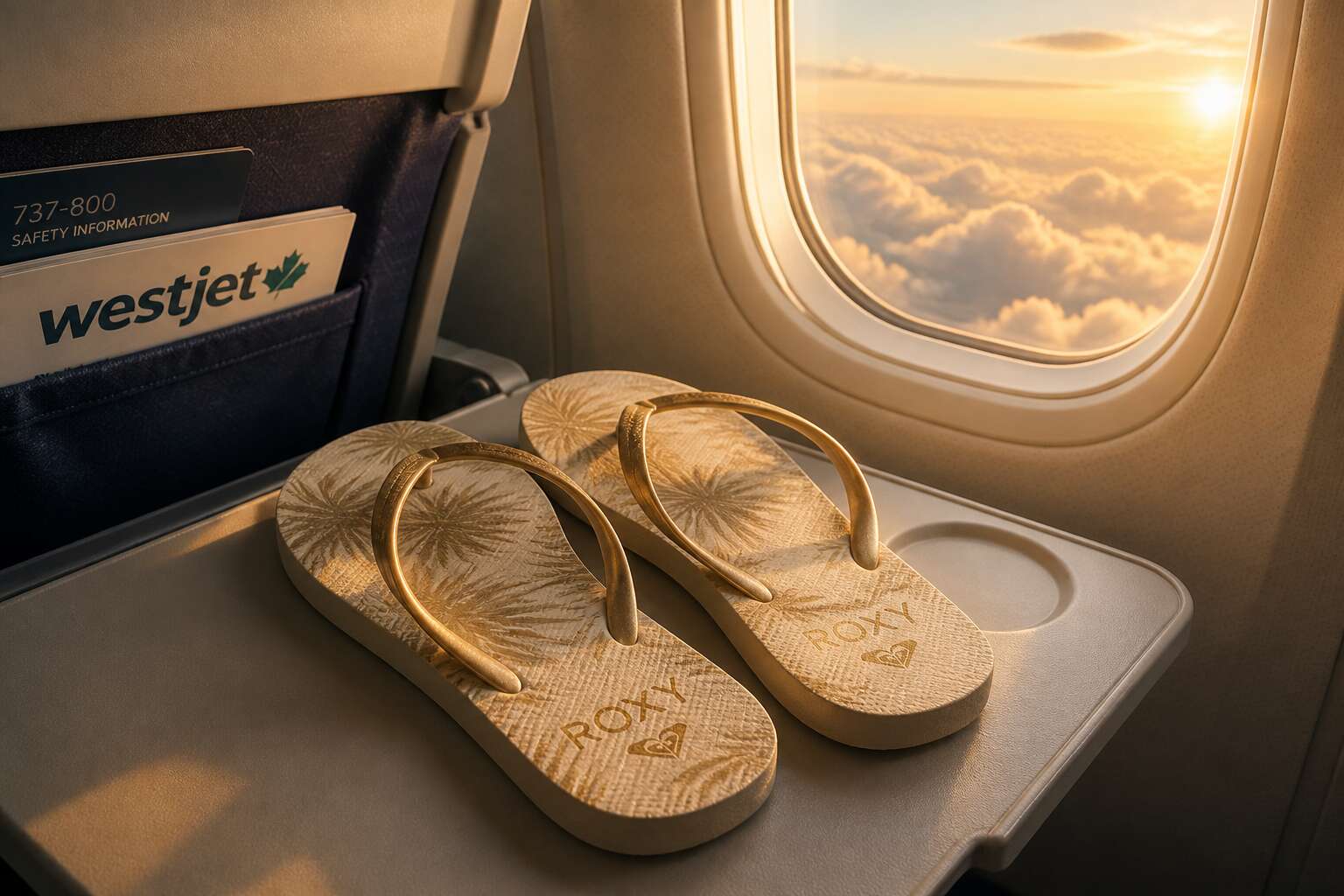
The Role of Footwear in Air Travel Comfort
TSA security checkpoint requirements for shoes
Nobody warns you about your feet when you fly. They swell, they ache, and they freeze in the blast of the overhead vent. I learned this the hard way on a long haul! Flip flops on a plane keep things airy, but they offer little cushioning for the long walk to arrivals.
The TSA security checkpoint requirements for shoes are straightforward: all footwear must come off. That means your bare soles touch the same floor every traveller has crossed. A sturdy pair of slip ons solves this instantly.
- Stand in line with your shoes in the bin
- Walk through the scanner barefoot
- Retrieve your footwear and move along
The comfort of your entire journey rests on this small choice.
Why feet swell at altitude and what it means for sizing
Cabin pressure at cruising altitude drops to the equivalent of 2,400 metres above sea level. Fluid shifts into your extremities, a process called dependent oedema. Your feet can expand by half a shoe size before you reach the halfway point. Rigid footwear adds to the misery.
This is where flip flops on a plane become practical. They accommodate the swelling without squeezing your metatarsals. But don’t assume they solve everything. The narrow straps dig into skin now puffy and tender, which is why I never recommend cheap flip flops on a plane for long haul.
- Swelling peaks around hour four
- Your usual size may not fit on the return leg
- Compression garments alter the swelling pattern
Sizing becomes a moving target the moment you board. Shoes that felt loose at departure may feel snug at landing, and the walk to baggage claim will punish any miscalculation.
The difference between short-haul and long-haul flight needs
The distance between your seat and the arrivals hall changes what your feet need. A short hop from Johannesburg to Cape Town lasts under two hours. Swelling has barely begun. Regular shoes remain comfortable for that window.
Long haul flights run five to eighteen hours. Your feet change through several states. The cabin air, the stillness, the hours of gravity pulling fluid downward. Flip flops on a plane become a practical response to a body that refuses to stay the same size.
- Under three hours, compression from laces is barely noticeable
- Past five hours, that same compression begins to ache
- Over eight hours, it becomes painful
That timing explains why flip flops on a plane split opinions among frequent flyers. The short haul traveller calls them careless. The long haul veteran calls them essential.
Evaluating Sandals as an In-Flight Choice
Breathability and ventilation benefits
Sandals allow your feet to breathe freely at cruising altitude. Unlike sneakers, they release heat and moisture, preventing that clammy sensation. For South African travellers, the warm cabin air often makes enclosed footwear unbearable. The open design of flip flops on a plane promotes continuous air circulation, keeping your skin cool and dry during extended sits.
Consider the ventilation mechanics: your foot rests on the sole with nothing trapping warmth. Toes remain exposed, and the gentle cabin airflow moves across the entire surface. This constant exchange reduces sweat buildup, a common cause of discomfort. Honestly, my own flights improved dramatically after switching!
A quick comparison of breathable options:
- Rubber flip flops offer maximum airflow with minimal coverage.
- Leather sandals provide moderate ventilation and some absorption.
- Sport sandals balance breathability with necessary foot support.
The lightweight nature of flip flops on a plane also means your feet stay unencumbered, allowing them to swell naturally without any pressure.
The downside: little arch support and ankle protection
The seduction of flip flops on a plane is undeniable, yet their limitations surface the moment you rise from your seat. Without arch support, your feet flatten against the unforgiving cabin floor, and the ankle remains utterly exposed to every jostle and stumble. This is the quiet trade-off: breathable ease for structural stability.
I find myself questioning the nature of comfort itself. Are we sacrificing long term wellbeing for transient relief? The vulnerabilities demand attention:
- No heel cup means every step transfers shock directly to the spine.
- Loose straps offer zero lateral resistance during turbulence.
- The thin sole amplifies every imperfection of the aisle.
Sandal designs acknowledge these gaps, but rarely overcome them. Your foot craves support, and flip flops on a plane simply refuse to provide it.
How sandals affect hygiene and foot odor
Sandals alter the hygiene equation at 30,000 feet. Your feet accumulate residue from security trays, terminal carpets, and the aisle floor. Flip flops on a plane leave the entire foot exposed, and the thin straps offer no barrier against moisture or dirt.
Cabin pressure encourages swelling, and trapped sweat amplifies bacterial growth. Without socks, odour develops quickly, especially on longer journeys. Leather footbeds absorb moisture and retain smell long after landing, while synthetic variants accelerate perspiration in warmer climates.
- Open toes allow debris to collect between the skin and the strap.
- Bare skin rubs against the strap edges, creating friction that traps dead cells.
- Shared surfaces like armrests and tray tables transfer microbes to bare skin.
Most travellers underestimate how much their feet sweat inside a pressurised cabin. A five hour flight in flip flops on a plane often ends with a lingering foot odour that no airport soap can effectively mask.
When sandals are a smart choice for beach destinations
Every coastal traveller knows the quiet urgency of reaching the shoreline. For a direct hop to a beach town, flip flops on a plane become a deliberate choice, not a casual one.
When the destination promises sun and salt, the in-flight footwear evaluation shifts. You are not commuting; you are entering a slower rhythm. Sandals suit this purpose when the ground is warm and the route from terminal to sand is short.
- Warm weather at both departure and arrival
- Minimal walking through airport concourses
- A resort or villa with immediate beach access
This is where the smart choice reveals itself. The open structure of the footwear allows an easy transition to barefoot life, a direct response to the place itself. Flip flops on a plane are not a compromise, they are a practical acceptance of where you are heading.
Alternative Slip-On Shoes for Frequent Flyers
Leather loafers: style and convenience
A 2023 survey found 62% of travellers under 35 prefer loafers to flip flops on a plane for regional hops across South Africa. Leather loafers offer the same slip-on ease.
Slip-on construction gets you through security lanes without fumbling with laces, and the upper protects against the chill of cabin air circulation. The leather moulds to your foot over time, so a well-worn pair rivals your favourite sandals.
For frequent flyers, loafers eliminate the sock debate. Wear them without socks thanks to modern leather treatments, then add dress shoes for meetings at your destination. I have yet to see flip flops on a plane match that dual role. One pair covers airports and boardrooms, and that practicality matters when you land in Johannesburg and head straight to a client site.
Match loafers to your itinerary:
- Thin rubber soles flex easily during long walks
- Leather uppers resist scuffs from overhead bins
Knit sneakers that pass through security quickly
Security queues stretch like winter tarmac, and knit sneakers move through them faster than flip flops on a plane. I have watched travellers pause to adjust straps, but a seamless upper demands nothing from you. The fabric wraps the foot in a compressed shroud, breathable yet sturdy, while the sole bends with quiet compliance.
These shoes form a pact with the airport floor. No laces to untie, no leather to guard. On a dawn flight from Cape Town, my knit pair cleared the scanner before I finished collecting my belt. Consider what they offer:
- Compression knit uppers hold their shape through long layovers
- Flexible outsoles fold into a carry-on pocket without protest
Flip flops on a plane grant simplicity, but knit sneakers grant a darker sort of ease, one that endures when the carousel spins and the city streets call.
The case for comfortable walking shoes
The elastic-sided slip-on sneaker deserves a closer look. It offers the same hands-free convenience as flip flops on a plane, but the closed construction keeps your feet presentable when the cabin crew walks past. The vulcanized rubber sole grips the aisle floor, and the canvas upper bends with each step down the jet bridge. I have worn a pair from Durban to London, and they remained comfortable throughout!
Consider what a slip-on sneaker provides:
– A low profile that fits under the seat without crushing
– A closed toe that guards against wayward trolley wheels
– A heel that stays put, no lace to snap or adjust
For the frequent flyer who values both speed and dignity, these shoes are the practical answer.
Using compression socks to maintain circulation
Some frequent flyers swap flip flops on a plane for a layered system. Compression socks pair with a wide slip-on to maintain circulation. The sock supports veins. The shoe allows room for the swelling that altitude causes. This combination gives you the convenience of sandals without the exposed foot.
Compression socks come in travel weights. Light compression suits most passengers. Heavy compression requires a doctor’s advice. A slip-on with a stretchy upper fits over the sock without cutting off blood flow.
Choose a shoe that lets the sock do its work:
- A low shaft that clears the ankle
- A soft heel counter that does not dig in
- A tread that grips wet jet bridge surfaces
The result is a foot that arrives without the numbness you get from flip flops on a plane. You walk off the aircraft ready for your connection. No buckling straps. No bare toes. Just a smooth transition.
Practical Tips for Airport and Plane Footwear
Packing lightweight sandals in your carry-on for the flight
Over 40% of passengers ignore the golden rule of cabin baggage: never bring shoes you cannot walk in. Packing lightweight sandals in your carry-on for the flight offers a clever workaround.
Board in sneakers, stow them under the seat, then switch to sandals once airborne. This approach keeps your feet comfortable during cabin pressure shifts. A quick list helps:
- Choose sandals with a thin strap that folds flat.
- Keep a small shoe bag to isolate them from clothes.
- Select a pair with textured soles for grip when walking to the lavatory.
Your flip flops on a plane become a reliable backup if your main footwear feels tight. This method works well.
Choosing shoes that accommodate post-flight activities
Your flight lands, and adrenaline fades. The actual challenge begins at the carousel. Flip flops on a plane feel like a liberation from laces, but they transform into a liability when you sprint for an airport shuttle or climb into a hire car. Check your afternoon agenda before you marvel at that tiny seat pocket.
Think about walking distances, surface textures, and social expectations. A hotel gym, a street market detour, a hastily arranged dinner. Your footwear needs to multitask, not just survive the cabin.
- Does the shoe offer a padded collar to prevent heel slippage?
- Can you tuck it under a seat without eviction?
- Will it match a smart casual outfit after two hours of recirculated air?
That last point matters. The flimsy pair you packed rarely coordinates with a blazer. Choose versatility, not regret!
Keeping your feet warm with cabin socks
The cabin thermometer drops about twenty minutes after takeoff. Your feet register that change before your upper body does. Flip flops on a plane give you ventilation but not warmth, and a thin rubber sole does nothing to hold heat against the floor.
Carry a pair of cabin socks in your seat pocket instead of your overhead bag. They take up less space than a neck pillow and they address the chill at its source. Slip them on when the cold starts, fold them away before landing, and your passport pocket still has room to spare.
Choose socks that dry quickly and fit snugly under the strap of your sandal:
- Merino blends regulate temperature better than cotton.
- Ankle height avoids bunching inside the shoe.
- Seamless toes prevent irritation during a long sit.
Slipping a pair of cabin socks on while wearing flip flops on a plane keeps your feet warm without forcing you back into closed shoes for the entire flight.
Etiquette and Policies Around Footwear in the Cabin
Airline rules on bare feet and sandals
Major carriers issue no blanket ban on sandals in the cabin. Your flip flops on a plane pass muster at the gate, yet the printed policy tells half the story. The crew wields authority over anything they deem disruptive. Bare feet, however, are a different matter for many airlines. The air inside the cabin is recycled, and odour travels quickly between rows.
Etiquette shifts the balance. A passenger slipping off a sandal and planting a bare foot on the armrest changes the perception of a whole flight. Policies on bare feet exist for hygiene and safety. A loose flip flop can be a tripping hazard on the aisle, and an unshod foot risks injury during turbulence.
Consider the moment you settle into your seat. Keep the sandals on for takeoff. A sudden stop can send a loose shoe skidding down the aisle. That is a hazard, not a fashion statement!
Consideration for seatmates: removing shoes
The cabin is a capsule of shared air, and the moment you slide your feet free of your sandals, you impose yourself on every passenger within three rows. A 2022 survey of frequent flyers found that nearly a third had been bothered by a fellow traveller’s bare feet. That statistic should unsettle you more than any forecast of clear-air turbulence.
The etiquette of removing shoes at altitude is not complicated, but it is unforgiving. Your flip flops on a plane are acceptable for the entire journey. The trouble with flip flops on a plane is the silent judgement of the row behind you. Sliding one foot out to flex an ankle is one thing. Placing a bare heel on the seatback tray is another. The seat pocket is not a footrest, and the armrest is not a hammock for your toes.
Consider the seatmate who must endure the sight of your exposed soles for a three-hour hop from Johannesburg to Cape Town. They have paid for a seat, not a front row view of your personal habits. I once watched a passenger prop a bare foot against the window shade and leave it there for two hours. The flight attendant said nothing, but every passenger in the row said all they needed to with their eyes. If you must remove a sandal, do it briefly and discreetly. Replace the shoe before the meal service arrives. The tray table is where food goes, and no amount of cabin air freshener will erase the memory of a foot that lingered there.
Frequent flyers follow a few unspoken rules when footwear comes off:
- Never remove both sandals at once. Keep one foot shod for stability when the plane banks.
- Keep socks on if you have them. Bare skin on the cabin floor risks contact with mystery stains.
- Check your shoes before you slip them back on. Crumbs and sharp debris find their way into open sandals.
The crew watches for more than seatbelt compliance. A passenger who wriggles out of their flip flops on a plane and pads down the aisle is a liability. The aisle floor carries grime from countless shoes, and a barefoot walk to the lavatory is a choice you will regret before you reach the door. Keep the soles of your shoes between you and that surface.
The old rule survives because it works. Keep your flip flops on a plane unless you are asleep, and even then, tuck your feet beneath the seat in front of you. Your freedom to fly without shoes ends where another passenger’s comfort begins.
Sanitizing your feet before walking through the aisle
Air travel already tests your patience, but the lavatory shuffle raises the stakes. Walking to the toilet in bare feet means navigating a surface that has seen coffee spills, mysterious sticky patches, and whatever the toddler two rows back left behind. The floor between your seat and the bathroom is the final frontier of cabin hygiene, and your flip flops on a plane are the only thing standing between you and regret. If you insist on going barefoot, sanitize your feet before you go. Disinfectant wipes are not just for tray tables. A quick wipe down before departure, one more before the aisle trek, and you might avoid bringing the entire cabin’s history back to your seat.
A short inventory of what your soles might encounter:
– Sticky residue from a dropped juice box
– The suspicious wet spot near the galley
– Crumbs that crunch underfoot
– Whatever the previous flight left behind
The unspoken policy is simple. Keep something between your skin and that carpet. Boarding with a fresh pair of flip flops on a plane gives you a clean barrier, one you can wipe down at the sink before you settle back into your row.
The role of slippers in premium cabins
The cabin is a social contract. Your footwear speaks before you do. Airlines rarely enforce a strict dress code, but the unwritten rules matter. In premium cabins, slippers replace shoes. They signal surrender to the journey. Flip flops on a plane, by contrast, declare a casual independence. But that independence has boundaries. I’ve seen passengers cross them with a bare foot on the armrest. Don’t be that person. Consider the seatmate who must endure the sight of your bare soles. Consider the meal service. A foot propped against the bulkhead is never acceptable.
Policies vary by carrier. Some require closed toes for safety. Others defer to common sense.
- Keep your flip flops on during takeoff and landing
- Use the provided slippers if you have them
- Tuck your feet away during service
The slipper is a quiet apology. It acknowledges the shared space. Flip flops on a plane demand more vigilance. Not because they are wrong, but because they expose you, and exposure requires awareness.
What to do with your sandals during the flight
Airlines differ on footwear policies. Some demand closed toes in economy, others leave it to passenger discretion. Flip flops on a plane rarely trigger a confrontation, but they do attract attention. The cabin crew notices. Your seatmate notices. The question is what you do with them once you settle in.
If you switch to cabin socks mid-flight, stow your sandals under the seat, not in the footwell where they become a trip hazard. When you walk to the lavatory, slip them back on. Bare feet on the cabin floor is a hygiene issue and a policy violation on most carriers. Trust me, that floor carries residue from every passenger who came before you.
You gain convenience at security and lose protection in the cabin. The etiquette is simple: treat your sandals as tools, not furniture.
Cultural differences in footwear etiquette
The cabin contains a mixture of global customs, and your feet become the chosen representative. Bare soles offend in some cultures, while removing shoes signals respect in others. South Africans often wear flip flops on a plane without concern, yet the same footwear may draw silent judgment on a Japanese or Gulf carrier.
Cultural rules vary widely:
- In many East Asian airlines, keep shoes on during meal service.
- Middle Eastern carriers often expect closed toes in premium cabins.
- European budget airlines leave the decision entirely to you.
When you stay alert to these cues, your footwear becomes a strategic choice rather than an accident. Stow them before the aisle walk, and mirror the etiquette of those around you.

0 Comments