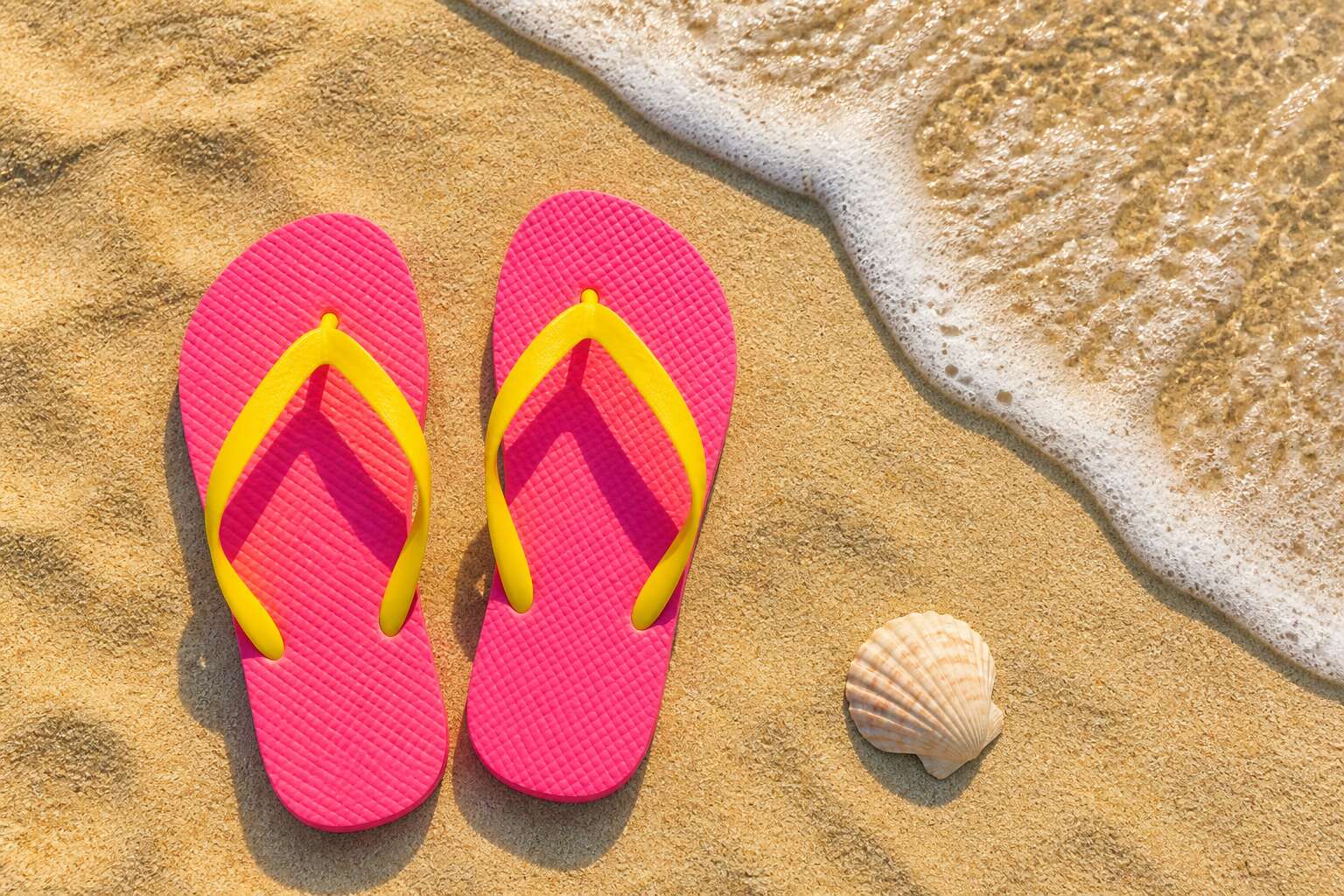
Anatomy and Design of Flip Flops
The Classic Thong Silhouette
Flip flops are a type of open footwear defined by a flat sole and a Y-shaped strap that passes between the first and second toes. The strap typically anchors at two points on the sides of the foot. This simple design makes them easy to slip on and off.
The origins of this footwear trace back thousands of years. Ancient Egyptian murals depict sandals with a similar thong structure. The Japanese zori, a traditional sandal made from rice straw, shares the same fundamental design. The modern term “flip flop” emerged in the 1960s, named for the sound the shoes make against the sole of the foot when walking.
Materials have evolved significantly over time. Traditional versions were made from natural materials like wood, papyrus, and leather. Contemporary flip flops are most commonly constructed from rubber, foam, or synthetic plastics. These materials offer flexibility, water resistance, and low production costs, making the sandals widely accessible.
Functionally, flip flops serve a specific purpose. They are designed for casual, warm-weather use, providing minimal foot support. They are ideal for beaches, pools, locker rooms, and other environments where quick removal and water resistance are beneficial. Their lightweight and flat profile make them easy to pack for travel.
However, they are not suitable for all activities. Extended walking or intense physical activity in flip flops can lead to foot strain, blisters, or other issues. The lack of arch support and ankle stability makes them a poor choice for long-distance walking or running.
In many cultures, these sandals hold significant social symbolism. In Japan, the zori is worn with traditional attire but is removed before entering homes and certain buildings to keep interiors clean and maintain a separation between the outside and inside. Across the world, wearing flip flops is often seen as a marker of a relaxed lifestyle, warm climates, and a more informal dress code.
The design has also become a platform for personal expression. They are available in a vast array of colors, patterns, and decorations. Some high-fashion designers have released expensive versions using premium leather, crystals, or metallic details, elevating the humble sandal to a luxury item.
The environmental impact of cheap, disposable flip flops has become a growing concern. Millions of pairs end up in landfills each year. In some coastal regions, discarded sandals contribute significantly to ocean pollution. This has led to initiatives that collect old flip flops and recycle the rubber into new products, such as art pieces or playground surfaces.
Modern variations address the limitations of the classic design. Some models feature thicker soles, contoured footbeds, or added arch support for greater comfort. Others include adjustable straps or textured footbeds for a more secure fit. Despite these enhancements, the core principle remains unchanged: a simple, durable sole held to the foot by a minimal strap.
Flip flops explained in full show an item that balances utility and simplicity. Their enduring popularity comes from this straightforward construction, which provides a cheap and convenient solution for warm-weather footwear. While they may not be appropriate for every occasion, their role in modern wardrobes is well-established and shows no signs of disappearing.
Footbed Materials and Contours
Step inside any beachside store and you will notice that not all soles are equal. The footbed, that quiet foundation beneath your foot, determines comfort more than the strap ever will. Common materials include:
- EVA foam for lightweight cushioning
- natural rubber for durability
- cork for a contoured, moulded fit
Cheap pairs rely on flat slabs that compress quickly. Contoured footbeds add a subtle arch raise, helping distribute weight evenly. Textured surfaces prevent slipping when wet. I find that a deeper heel cup makes a surprising difference. It holds the foot in place, reducing the urge to grip with your toes. As flip flops explained in full, the anatomy of the sole is where function hides. Materials matter, but so does the shape beneath you.
Outsole Tread and Flexibility
The outsole is the flip flop’s contact point with the world. Tread patterns vary from ridges to deep chevrons. The purpose is grip on wet surfaces. Flexible outsoles bend with each step. Rigid ones cause a slapping gait. Material affects traction and longevity. Natural rubber offers the best balance. EVA foam outsoles are lighter but wear faster.
For flip flops explained, the tread reveals the intended terrain. Beach sand needs open patterns that shed debris. Pool decks demand aggressive traction. Key features include:
- Siping: channels water away
- Contact patches: flat zones for stability
- Flex grooves: deep lines for natural foot roll
These elements work together. A good outsole moves with you. Flexibility and tread reduce foot fatigue.
Toe Post Variations
Toe post variations often escape notice, yet they decide comfort. The classic thong pinches between the first and second toes. Modern designs use a rounded post that rests lower, easing pressure. Others angle the post inward to match your foot’s spread. Wider toes favour a thicker post; thinner posts suit a lighter stride. Consider these points:
– Material flexibility: smooth rubber chafes; moulded grips cradle the skin.
– Attachment depth: deeper anchoring prevents tearing from the footbed.
– Post height: taller posts leave room for bunions.
Rural South Africa sees long walks on foot. A poorly placed post turns a simple errand into misery. Flip flops explained this way, the toe post is essential, not an afterthought. I always inspect the post’s base. That is flip flops explained.
A Brief History of Flip Flops
Ancient Origins Across Cultures
Flip flops explained through their ancient lineage reveal a surprisingly global pedigree. The earliest known pairs date back over 6,000 years to Egyptian wall paintings, where papyrus and palm leaves were bound to the feet. Meanwhile, Japanese zori sandals, crafted from rice straw, became ceremonial footwear. Greek tyrants wore thick-soled versions, while Roman patricians adorned theirs with jewels. In India, wooden padukas served spiritual purposes.
What unites these distant cultures? A shared recognition that a simple sole with a toe post offers relief from scorching ground. I find it fascinating that this humble design, unchanged for millennia, still walks among us today. The next time you slip yours on, you are stepping into a tradition that spans continents and ages.
Post-War Popularity in America
America’s adoption of flip flops began with a homecoming. When soldiers returned from the Pacific theatre after World War II, many carried Japanese zori sandals in their duffel bags. The simple rubber footwear captured immediate attention. By 1946, manufacturers produced millions of pairs annually. The name “flip flop” derives from the slapping sound the sole makes against the heel.
Post-war prosperity created a leisure class with time for beaches and backyard barbecues. Southern California’s surf culture adopted the sandal as uniform. Hollywood films showcased beach lifestyles, accelerating demand nationwide. The 1950s turned the flip flop into a standard feature of casual American life.
Key factors drove this growth:
– Military surplus rubber became cheap and abundant
– Rising disposable income supported a relaxed lifestyle
– Surfers and film stars gave the sandal cultural weight
This period transformed an ancient design into a commercial phenomenon. Flip flops explained through this lens reveal a nation redefining comfort after years of rationing.
The Rise of Foam and Rubber
Rubber made the flip flop affordable, but foam made it essential. The 1960s introduced ethylene vinyl acetate, a material that could be injection-molded into one piece. This cut production costs while improving flexibility.
Foam also delivered cushioning without weight. A typical pair weighed under 200 grams, light enough to fold into a pocket or beach bag. The material resisted the salt, sun, and chlorine that cracked earlier rubber compounds.
- Rubber supplied grip and durability on wet surfaces
- Foam provided shock absorption for all-day wear
- Molded construction removed the weak points where straps once separated
This shift changed how manufacturers approached sandal design. Flip flops explained through material history show how a production advance turned a novelty into a daily essential.
Flip Flops in Modern Fashion
Somewhere in the late 1990s, flip flops slipped off the sand and onto city sidewalks. Designers began reworking the humble sole with leather, embellishments, and contoured footbeds. The modern fashion cycle treated them as both rebellion and convenience, depending on the setting.
In South Africa, flip flops explained appear at braais, malls, and even weddings, where they test the boundaries of good taste. They have become a quiet statement of priorities.
- Premium brands now sell bespoke pairs with orthopedic claims
- Retro rubber models remain cult items for nostalgic shoppers
- Corporate dress codes still resist toe exposure, mostly
Types of Flip Flops for Every Occasion
Everyday Rubber Flip Flops
The everyday rubber flip flop is a silent covenant with the South African sun. It endures the scorching tar of a suburban street and the gritty threshold of a coastal shower without complaint. Its charm is its anonymity, a humble uniformity that asks for nothing but a dry grip.
Consider its domain, the unglamorous errands that define a day:
- Popping over to the spaza for bread.
- Fetching the mail from the gate.
- Standing on the stoep while the kettle boils.
Here, the flip flops explained takes its purest form. It is not about fashion dictums, but about the quiet logic of a sole that absorbs heat and shrugs off sand. It is the footwear of the mundane, and in that mundanity, it possesses a strange, rugged poetry. It simply exists, faithfully, until the straps finally give way to the heat of another summer.
Sport and Outdoor Sandals
Sport and outdoor sandals are the engineered evolution of the flip flop. They use adjustable straps, closed toe guards, and aggressive tread patterns. The outsoles grip wet rock and loose gravel.
For the South African hiker, the Table Mountain trail demands more than a flat rubber slab. The arch support is pronounced. The heel cup is deep. The straps wrap around the ankle and instep with hook-and-loop closures. Flip flops explained for the trail requires this level of detail.
A reliable sport sandal should offer:
- A contoured footbed that resists water absorption
- A toe bumper for rocky terrain
- An outsole with multi-directional lugs
- Quick-drying webbing
The foot is locked into place. The stride retains its natural efficiency. Brands like Teva and Keen built entire categories on this principle. For the paddler or the summer trail runner, these sandals perform across varied terrain.
Dressy and Fashion-Forward Styles
Flip flops explained often stops at the beach, but the dressy category rewrites that rule. Designers now craft pairs with metallic leather, embossed textiles, and slim soles that catch the light. A heel strap or a subtle wedge can elevate an outfit without sacrificing the ease you expect. For a braai or a gallery opening, these styles bridge comfort and polish.
Consider what makes them versatile:
- Clean lines that pair with tailored shorts or linen trousers
- Neutral tones that anchor a bold print
- Cushioned footbeds that still feel grounded
The psychology of choice is simple. You want to look intentional, not underdressed. Fashion-forward sandals allow that confidence while your feet stay free. In Johannesburg or Cape Town, a sharp pair can carry you from a market stall to an evening glass of wine. This lens makes the story one of adaptation, not compromise.
Orthopedic and Supportive Options
Around 60% of South Africans will experience some form of foot discomfort in their lifetime. This is where the narrative of flip flops explained takes a practical turn. Orthopedic options move beyond the flat foam slab. They are engineered with contoured arch support, deep heel cups, and shock-absorbing midsoles that cradle the foot. The focus shifts from mere convenience to long-term alignment.
The challenge is finding support that does not look clinical. Modern designs hide these features within textured straps and earth-toned finishes. Consider what to look for:
– A moulded footbed that mirrors the foot’s natural curve
– Adjustable straps to accommodate swelling or high insteps
– A lightweight but durable outsole for uneven pavements
For daily walks through a city like Durban or a long day at a shopping centre, these options reduce strain on the knees and lower back. The best pairs offer a stable base without feeling heavy, balancing the need for correction with the ease of slip-on wear. This is thoughtful design for an active life.
Eco-Friendly and Recycled Materials
The average South African owns three pairs of formal shoes that gather dust and one pair of flip flops that have survived actual rivers of sweat. That is the honest math of footwear. When we talk about flip flops explained through an eco lens, the conversation shifts from comfort to conscience. Recycled rubber, reclaimed ocean plastic, and algae based foams now form the soles of sandals that would otherwise sit in landfills for centuries.
Local brands are getting clever with waste. Old tyres become treads. Discarded fishing nets become straps. Some manufacturers even grind down previous flip flops to create new ones, a closed loop that keeps the beach clean and your feet busy. This is flip flops explained with a green twist.
- Recycled EVA foam from factory offcuts
- Natural hemp or organic cotton webbing
- Biodegradable rubber compounds from rubber trees
The result is a pair that lets you walk the promenade without the guilt of contributing to the plastic patch. It is not perfect, but it is a start. And your feet will thank you, even if the ocean cannot speak.
Benefits and Drawbacks of Wearing Flip Flops
Breathability and Convenience
According to a 2024 podiatry report, South Africans spend an average of two hours daily in flip flops. I find that statistic alarming yet unsurprising.
Breathability is the flip flop’s chief advantage. Open construction lets air circulate freely, sparing feet the clammy misery of closed shoes during summer. Convenience, too, is unmatched. Slip them on for a quick trip to the beach or the shop. But these virtues come with caveats. The same openness leaves feet exposed to dust and sharp objects. The easy slip-on feature tempts me to wear them where proper footwear is wiser. Consider these trade-offs:
- Breathable uppers reduce sweat buildup, yet offer zero protection from chilly sea breezes.
- They slide on in seconds, but they also slide off during a hurried stride.
This trade-off clarifies flip flops explained for daily South African life: every benefit carries a corresponding drawback.
Potential Foot Health Risks
Flip flops explained in daily South African life begins with a single truth: an open sole places the foot in a natural, unrolled position. The small muscles in your arch engage with every step, sharpening foot coordination and giving the ankle a better sense of balance over time. I appreciate that lightness on a warm morning. Yet the same openness leaves shock absorption almost entirely to the body, so an uneven step sends full force into a joint with no supportive lid.
- Plantar fascia strain appears because the arch has no supportive structure beneath it.
- Achilles tendinopathy can set in from a flatter walking angle.
- Knee misalignment emerges when the foot swings slightly sideways at toe off.
Those three outcomes sit at the centre of any flip flops explained conversation. The thinness of the sole and the tension of the toe post determine real comfort, but the rubber alone never protects against the shock of a curb or a hidden stone. This is the trade named in plain terms in foot clinics across the country.
When Flip Flops Are Appropriate
The honest truth about flip flops explained for the local beachgoer is that they are simple footwear, not a miracle cure. On the sands of Camps Bay or the poolside at Clifton, they are perfect.
The benefits are obvious when the terrain is forgiving. They offer ventilation, instant removal, and a zero-barrier entry to sand.
- They dry quickly after a swim.
- They pack flat for a day bag.
- They give the foot total freedom in hot weather.
But the drawbacks appear the moment you hit a tarred pavement or a rocky trail. The lack of arch support and the thin sole magnify every pebble. That is when the foot starts to hurt, and the ankle starts to complain. Wearing them on a long walk is a direct path to plantar fasciitis. They find their natural home on the beach, not the city streets. That is the flip flops explained rule.
Signs You Need More Support
Nearly 80% of foot issues are linked to unsupportive footwear, yet we still slip into flimsy sandals without a second thought. This is where the real conversation about flip flops explained begins, separate from beach days and poolside lounging. The core appeal is undeniable: they offer breathability, zero fuss, and that immediate sense of freedom after a long day in closed shoes. You can kick them off in seconds and feel the cool ground beneath your feet, which is a true pleasure along the Cape Town coast.
However, the trade-off for that simplicity is structural support. When you walk in a traditional flat thong, your toes must grip the sole to keep it on, which alters your natural gait and places extra strain on the Achilles tendon. The lack of arch support means your foot flattens with every step, leading to sharp heel pain that radiates up the leg. This is where you must listen to your body and watch for specific warning signs.
Signs You Need More Support:
– Persistent pain in the arch or heel after short walks
– A feeling of instability or wobbling on uneven surfaces
– New or worsening numbness in the toes
– Strains in the calf muscles that appear daily
If you experience these symptoms while wearing your regular pair, it is time to upgrade. Look for styles with a contoured footbed, a deeper heel cup, and a slightly thicker, shock-absorbing sole. Your feet carry you through every adventure, from the bustling streets of Durban to the quiet trails of the Drakensberg. Treat them with the respect they deserve, even when the sun is shining and the sand is calling your name.
How to Choose and Care for Your Flip Flops
Finding the Right Fit and Size
Ever noticed how a perfectly fitted flip flop feels like a second skin? The right size is non-negotiable. Your heel should sit flush with the back edge, and your toes shouldn’t hang over the front. That’s flip flops explained in a nutshell. For the best fit, shop later in the day when your feet naturally swell. If you’re between sizes, size up because most straps stretch slightly. Caring for your sandals is equally important. Follow these simple steps:
- Rinse off sand and salt after each beach trip.
- Air dry in the shade, never in direct sunlight.
- Clean with a damp cloth and mild soap; avoid machine washing.
- Rotate between pairs to let them recover their shape.
Check the tread regularly. A smooth sole offers zero grip on wet rocks. Replace worn pairs immediately to avoid foot strain.
Breaking In New Flip Flops
Selecting the right pair starts with sizing. Flip flops explained simply: your heel must sit flush against the back. Leave a thumbnail of space at the front to avoid stubbing. Shop later in the day when feet expand.
Breaking in new rubber takes patience. Wear them indoors for short bursts. For stubborn straps, soak the sandals in warm water for ten minutes, then walk around until they dry. This moulds the footbed perfectly.
Care extends their life. Rinse off salt and sand after every beach trip. Use a damp cloth with mild soap, then air dry in the shade. Rotate between two pairs to let the foam bounce back. Inspect the tread often. A smooth sole offers no grip. Replace such pairs immediately to prevent slips.
Cleaning and Maintenance Tips
Flip flops explained cover both design and function. A typical pair has a rubber sole and a strap that holds the foot. Select options with cushioned support for daily use. Check the strap attachment points for stability.
Care routines for flip flops are simple. Rinse them after sandy or salty outings. Use a damp cloth with mild detergent. Air dry them away from direct sunlight. Examine the outsole for thinning or uneven wear.
Replacing worn flip flops prevents foot pain. A flexible sole offers little protection. Store pairs flat to maintain shape. Rotate between two pairs to extend their lifespan. This approach keeps your feet comfortable and safe.
When to Replace Your Pair
Choosing the right pair means paying attention to how the sole bends under the ball of your foot. A proper flex point sits exactly where your foot naturally folds. Run your thumb along the strap anchors. They should feel recessed, not protruding. This part of flip flops explained often gets overlooked, yet it determines long term comfort.
For care, treat the footbed like a sponge. Excessive heat warps the foam structure. Keep pairs in a cool, dark place, and avoid leaving them in a car boot. Water is fine, but salt accelerates material breakdown, so a quick rinse after beach days remains essential.
Replace your pair when you notice these warning signs:
- The heel shows a visible angle from compression
- The strap pulls loose from the sole
- You feel every pebble through the footbed
Waiting until pain appears is too late. A flattened midsole offers no shock absorption, and your gait compensates in damaging ways.

0 Comments