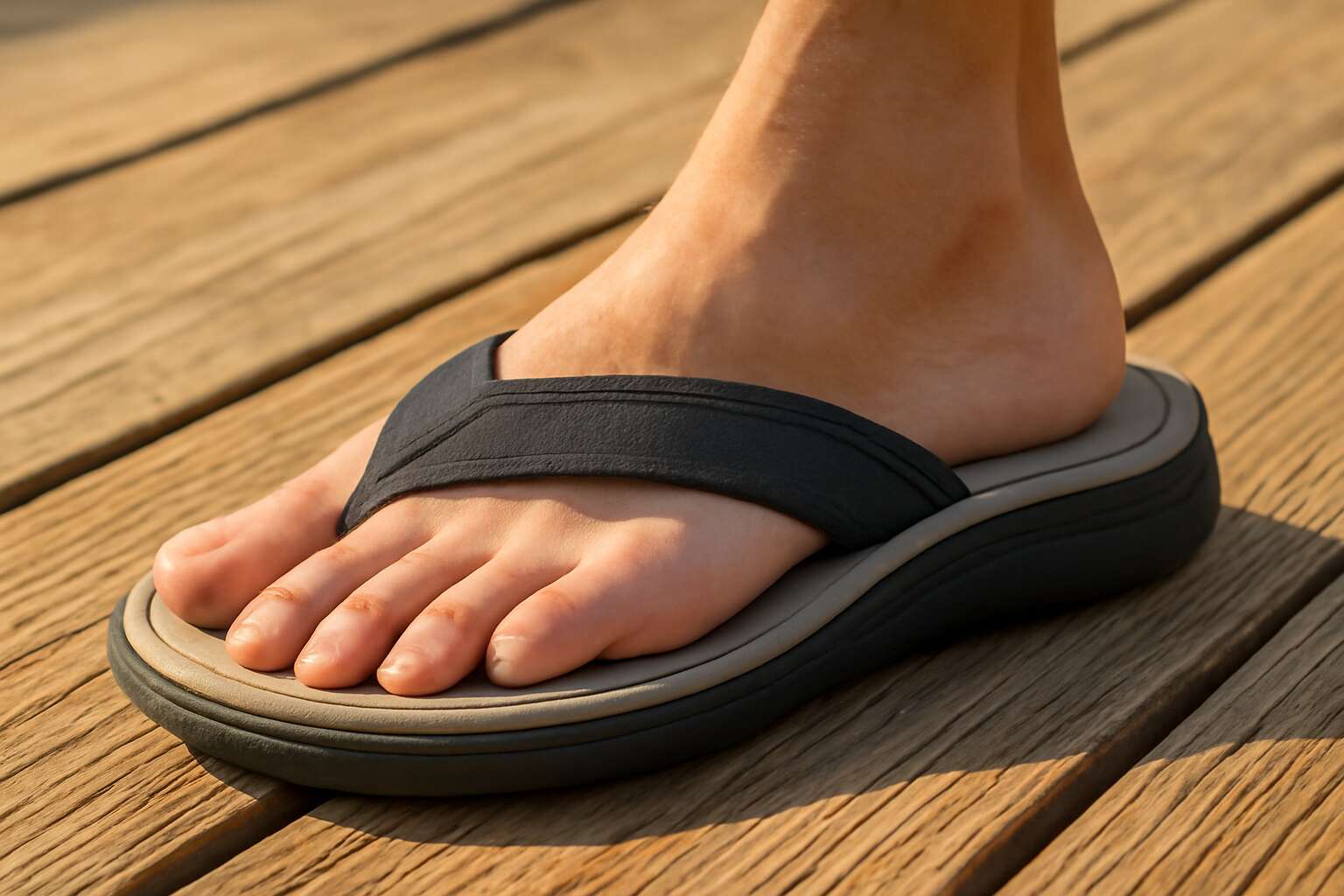
How flip flops impact foot health
Foot anatomy and the role of footwear
One in three adults lives with foot discomfort at least weekly, a quiet reminder that every step is a story written in footwear. The question: are flip flops good for your feet, and how do they shape the journey from sand to sidewalks in South Africa?
Feet are marvels of anatomy: arches, tendons, and a delicate balance of muscles that absorb shock with each stride. Footwear matters because it can cradle or challenge that structure. Flip flops offer freedom but minimal support, forcing calf and toe muscles to work harder.
- Arch and forefoot alignment
- Foot strike and gait stability
- Strap fit and rubbing risk
On sunlit Cape promenades and coastal trails, the right balance of freedom and support shapes daily comfort and movement’s harmony.
Gait, posture, and how sandals influence alignment
One in three adults lives with foot discomfort at least weekly—a quiet reminder that every step is a story written in footwear. On sunlit Cape promenades, the flip flop is a siren call: freedom at your toes, danger to your arches.
The question: are flip flops good for your feet, and what does that mean as you swap sand for sidewalks across South Africa? They offer minimal midfoot support, so the arch rests easy but toe and calf muscles brace to stabilize each step, often shortening stride and shifting load.
Sandal alignment matters: straps that grip between the toes can tilt the foot, while loose straps invite rubbing and blisters. This can influence posture over a day, particularly on uneven city pavements or beachboardwalks.
- Freedom of movement
- Minimal arch support
- Rubbing risk at straps
Common foot issues linked to flip flops
One in three adults endures foot discomfort weekly, a quiet drumbeat beneath our steps. The question many ask as the South African sun curves along the promenade remains stirring: are flip flops good for your feet? They wear freedom with a flat kiss to the arch, while the toes and calves brace to secure each step across sunlit sidewalks.
Common foot issues linked to flip flops in daily life include:
- Blisters from strap rubbing
- Toe cramping from gripping
- Arch strain with little support
- Foot fatigue on uneven surfaces
Between beach boardwalks and pavements, straps that grip between the toes can tilt the foot, while loose bands invite rubbing, turning a simple stroll into a subtle audit of posture.
When flip flops can aggravate foot problems
Under the South African sun, a simple sandal can swing between easy confidence and quiet concern. One in three adults endures foot discomfort weekly, a subtle drumbeat beneath each step. The question many readers ask remains: are flip flops good for your feet. They promise freedom, but the road asks a different price.
These flat companions reduce contact with the arch’s natural support, nudging your gait toward unfamiliar rhythms. On sun-baked sidewalks and boardwalks, the foot must grip more with toes, and the ankle and calf brace for balance. The trade-off is a higher chance of fatigue on uneven surfaces.
- Strap design can alter stability and friction against the skin.
- Sole thickness influences how your foot absorbs impact.
- Ergonomic footbeds offer a hint of alignment without locking the foot in.
Footwear choices carry stories in every stride, and the flip-flop chapter invites a closer look.
Types of flip flops and their support levels
Traditional flat soles vs contoured footbeds
Sun-warmed streets and ocean breeze tempt quick footwear choices. I often hear the question are flip flops good for your feet, and the answer is nuanced. The right type, worn mindfully, can be surprisingly supportive—if you pick the form that fits your stride!
Traditional flat soles offer minimal arch or heel support. They let your foot sit on a wafer-thin surface, which can encourage overpronation or fatigue after a few blocks along South Africa’s city sidewalks. For anyone with foot or knee concerns, they are a caution sign.
Contoured footbeds, by contrast, cradle the heel, support the arch, and guide your gait more evenly. Look for a deeper heel cup and a denser foam that resists flattening over time!
- Arch support that aligns with your medial arch
- Heel cup for stability
- Ridge-free forefoot to reduce pressure
Cushioning, arch support, and stability features
Types of flip flops range from wafer-thin EVA to molded cork footbeds that cradle the arch like a whisper. Cushioned midsoles soften the pavement, while models with contoured footbeds nudge your stride toward a steadier rhythm. On South Africa’s sunlit promenades, the right profile can turn a simple walk into a small ceremony of balance.
- Cushioning: a responsive midsole that absorbs impact without sacrificing flexibility.
- Arch support: alignment features that cradle the medial arch for steady gait.
- Stability: a deeper heel cup and a grippy outsole to resist wobble on uneven surfaces.
The question “are flip flops good for your feet?” surfaces in the minds of mindful shoppers, and the answer leans toward yes when the design emphasizes cushioning, arch support, and stability, allowing comfortable wandering along Cape Town’s waterfronts or Jo’burg boulevards.
Materials, durability, and comfort trade-offs
Flip flops arrive in a spectrum: wafer-thin EVA that skims the pavement, to cork-footbed designs that cradle the arch with a whisper. Some profiles sit close to the ground for breezy, all-day wear; others offer a gentle lift and a deeper heel cup for longer strolls along South Africa’s waterfronts.
- wafer-thin EVA for featherweight comfort
- molded cork footbeds that adapt to your foot
- rubber outsoles with grip for stable steps
- leather or microfiber uppers with cushioned linings
Materials tell the durability and comfort story. EVA stays light and affordable but may wear quickly in sun and sand; cork footbeds soften with heat yet can compress under daily use; rubber outsoles resist moisture and grip slick surfaces.
The question “are flip flops good for your feet” hinges on design choices that balance cushioning, arch support, and surface grip. In South Africa’s varied terrain, the right pair can be a reliable companion for easy wandering.
Budget versus quality: how to assess value
In South Africa’s sun-burnished coastlines, comfort outruns fashion on the promenade, and many wander with sandals as if they were calling cards of the sea. The big question remains: are flip flops good for your feet when worn on long coastal strolls?
Types and their support levels vary: minimalist flats feel like whispers on the sand, contoured footbeds cradle the arch and align the toes, and sport-inspired pairs add a firmer midsole and reinforced heel cup for stability.
- Minimalist flats with little arch support for short jaunts
- Contoured footbeds that cradle the arch and offer subtle lift
- Sport-style flips with firmer midsoles and a more secure heel
Budget versus quality reveals contrasts: cheaper materials may falter in sun and sand, while mid-range options tend to balance longevity with comfort. In the end, the story hinges on the fit, the construction, and how the pair meets the rhythm of your steps.
Guidelines for selecting flip flops that support your feet
Finding the right fit and secure toe grip
Comfort isn’t a luxury; it’s a way of life, my grandmother would remind me as the SA veld glows bronze at dusk. So, are flip flops good for your feet in the heat? The answer hinges on finding a fit and a secure toe grip that keeps you steady from gate to market. In rural mornings and sun-baked towns, a well-chosen pair feels like a quiet companion, not a compromise.
- Secure toe grip that keeps the foot from sliding on uneven terrain
- Proper strap configuration and width to hug the foot without pinching
- Non-slip outsole with textured tread for grip on dusty or wet surfaces
With a thoughtful choice, you honor the feet that carry you home—from dusty lanes to market lanes.
Assessing arch support and heel cup
“Comfort isn’t a luxury; it’s a way of life,” my grandmother would say, and it guides how we choose flip flops in the heat. The question remains: are flip flops good for your feet? Thoughtful guidelines start with arch support and a solid heel cup—the quiet backbone of a steady, sunlit stride across South Africa’s dusty towns.
- Arch support that matches the natural curve of your foot
- A firm heel cup to cradle the back of the foot
- Wide straps and a grippy outsole for stability on uneven paths
Materials balance softness with durability, and the best pairs sit gently on the skin without pinching. From gate to market, the simplest choices reveal themselves in everyday miles, where a well-supported foot feels steady even on sun-baked gravel.
Insoles, removable inserts, and customization options
Guidelines for selecting flip flops that support your feet reveal a balance between comfort and craft, especially under South Africa’s sunlit days. So, are flip flops good for your feet? The answer rests in a thoughtful footbed, a firm underfoot feel, and straps that stay put as you wander from markets to dunes. Look for a structure that respects your natural stride without pinching or slipping.
- Insoles: some flip flops come with built-in supportive insoles that cushion the sole while remaining breathable.
- Removable inserts: choose models that accept removable inserts so you can tailor cushioning or use orthotics.
- Customization options: seek contoured footbeds, adjustable straps, and grippy outsoles for varied terrain.
Such features let everyday miles feel like a sunlit stroll, across coastal towns and urban sprawl.
Testing comfort before buying: on-site and at-home checks
Feet carry us through sunlit streets and markets, and a question lingers: are flip flops good for your feet? The answer rests on a thoughtful footbed, a firm underfoot feel, and straps that stay put as you wander from markets to dunes. Comfort isn’t a luxury; it’s a design choice that respects your stride.
Testing comfort before buying unfolds in two chapters: on-site and at-home checks. In-store, observe how the sole flexes, whether the arch hints at support, and if the strap remains comfortable as you circle the floor. These moments reveal whether the sandal will carry you through South African days without nagging pain.
At home, the test continues as you move across floors and hours. A simple mood ledger helps note rubbing, pinching, or stance shifts after a stroll along beach and city sidewalks.
Sizing, width, and break-in considerations
Foot fatigue hides in the seams of poor fit. A recent survey found that 40% of shoppers report pinching after an hour of wandering in flip-flops. The question, are flip flops good for your feet, lingers. The answer favors mindful sizing, adequate width, and a patient break-in that honors your stride.
Start with true-to-size length; if you have a wider forefoot, seek options with a roomy width and an accommodating toe box. A stable strap that sits without bite across the arch keeps you from wobbling on cobbles and dunes. A subtle arch support or contoured footbed enhances comfort without betraying the sandal’s simple silhouette. Break-in becomes a quiet ritual, revealing comfort as days unfold across South African markets and beaches.
Alternatives and complementary footwear for foot health
Supportive sandals with structured arches
Foot health thrives when feet have a trusted companion, not a fleeting fling. Alternatives and complementary footwear for foot health offer a gentler path than bare footing in the sun. Supportive sandals with structured arches become quiet guardians for daily walks and seaside strolls alike. The question, are flip flops good for your feet, is nuanced and context-dependent.
These choices blend ease with protection. Consider these options:
- Structured-arch sandals that cradle the midfoot while toes spread
- Breathable athletic slides with a gentle heel cup for stability
- Closed-toe sandals with contoured footbeds for all-day comfort
On South African shores and city sidewalks, style can meet support. Foot health feels like a small triumph with each step.
Breathable sneakers and athletic sandals as alternatives
Across South Africa’s coast towns, foot fatigue follows many after a day in the sun. Readers often ask: are flip flops good for your feet? The answer emerges when you pivot to alternatives that blend ease with support. Breathable sneakers and athletic sandals offer a gentler path than bare footing for daily walks and seaside errands.
Breathable sneakers feature mesh uppers that wick moisture and keep arches supported, while athletic sandals provide a gentle heel cup for stability without pinching.
Consider these accessible picks:
- Breathable sneakers with mesh uppers and flexible soles
- Athletic sandals with contoured footbeds and secure straps
On long days along the boardwalk, these choices support your stride without sacrificing beach-ready style!
Water-friendly options for beach and pool days
Sunrise oils the horizon of the Cape coast, and fatigue shadows the soles after a day along the boardwalk. are flip flops good for your feet? The answer surfaces when you lean into choices that blend ease with support, turning a seaside errand into a steadier, more confident stride.
- Quick-dry sandals with a contoured footbed
- Water shoes with flexible uppers and grip
- Pool-friendly slides with secure straps
Water-friendly options for beach and pool days keep pace with tides while preserving foot health. They shed moisture, offer traction, and cradle the arches without pinching, so you glide from sun-drenched sand to poolside shade with quiet assurance.
In this coastal mosaic, these accessible alternatives offer a gentler path for daily strolls—where style and support drift together like sea mist.
How to transition between flip flops and more supportive footwear
Sun, sea, and a chorus of squeaky sandals—the beach day soundtrack. That question—are flip flops good for your feet—lingers as reliably as the sea breeze. The answer surfaces when you blend ease with support, turning a seaside errand into a steadier, more confident stride.
- Quick-dry sandals with a contoured footbed
- Water shoes with flexible uppers and grip
- Pool-friendly slides with secure straps
These alternatives offer traction, quick-dry comfort, and an arch-friendly cradle without pinching. They bridge casual SA beach strolls and poolside days with a natural flow, letting feet glide from Cape Town boardwalks to Durban pools with ease and a gentler transition from flip flops to more supportive silhouettes.
Foot health considerations by condition
Flat feet and overpronation: choosing supportive options
Flat feet and overpronation bend the foot inward, nudging the ankles and knees toward misalignment. are flip flops good for your feet? Not by default. A sandal that offers a guided arch, a secure heel cup, and a measured midsole can temper inward collapse and ease fatigue during sunlit Durban days or Cape Town strolls.
- Arch support: contoured or orthotic-friendly
- Heel cup: stabilizes the rearfoot
- Midsole: controlled rigidity to curb excessive flex
- Straps and toe grip: secure, reduce slippage
These design nuances reveal how foot health threads through daily choices. While flip flops remain convenient, for flat feet and overpronation, the skein of options—structure, materials, fit—shapes comfort and alignment in equal measure, especially under SA’s varied landscapes.
Plantar fasciitis and flip flop use: tips to minimize strain
Plantar fasciitis tightens the heel and arch, turning Durban strolls into a test of will. The pain tends to linger after a day on hard surfaces. In SA, plantar fasciitis is a common heel issue, so footwear choice matters. Many readers ask are flip flops good for your feet, and the answer hinges on support and fit.
Tips to minimize strain when choosing or wearing flip flops for plantar fasciitis:
- Arch support: look for a molded or contoured footbed that supports the plantar fascia
- Heel cup: a secure rearfoot cradle helps stabilize the foot
- Midsole: a measured rigidity reduces excessive fascia stretch
- Straps and toe grip: secure, non-pinching straps cut down on slippage
Used wisely, flip flops can fit into a balanced South African lifestyle, from beach days to boardwalk strolls, without sacrificing foot health.
Diabetes and foot care: safety considerations with sandals
Foot health in diabetes is a quiet storm—one misstep can echo all day. In South Africa, sunny days invite sandal wear, and the big question lingers: are flip flops good for your feet? The answer isn’t a blanket yes or no. For diabetics, protection, circulation, and sensation matter more than style. A sandal must cushion the step, guard against rubbing, and keep the foot stable on Durban’s heat and Cape Town’s promenades.
- Secure, non-pinching straps to minimize rubbing
- Cushioned, contoured footbed to support the arch
- Stable heel cup and measured midsole rigidity for balance
- Toe coverage that shields without trapping heat
For readers tracking daily foot care, safety considerations with sandals should not be overlooked. That question—are flip flops good for your feet—remains central when neuropathy or poor circulation is part of the picture, guiding choices that balance climate, comfort, and protection.
Preventive exercises to strengthen feet and improve gait
Foot health is the backstage crew of mobility—quiet, stubborn, and far more decisive than sandals’ fashion sense! In South Africa, up to 40% of adults report foot discomfort at some point in a year, and the question are flip flops good for your feet remains nuanced, especially when a condition nabs balance or numbness.
Preventive exercises to strengthen feet and improve gait act like a quiet insurance policy, not a salon accessory. Consider these guiding concepts:
- Intrinsic muscle strengthening concepts
- Proprioceptive balance work
- Gait pattern awareness and variability
When climate invites relaxed footwear, the aim is harmony between protection, comfort, and control rather than a style-only impulse.
When to consult a clinician or podiatrist
Foot health is the backstage crew of mobility, and in South Africa, up to 40% of adults report foot discomfort yearly. The question are flip flops good for your feet? The answer isn’t one-size-fits-all; it hinges on the condition at hand and the demands of your day.
For some conditions, a sandal with structure matters more than style. Diabetic feet, neuropathy, plantar fasciitis, flat feet, or inflammatory arthritis can tilt the balance away from carefree, open-toe footwear. In these cases, the footwear choice influences comfort, balance, and overall joint loading—even when you’re simply strolling along the promenade or shopping at a market.
- Numbness, tingling, or changes in sensation that don’t settle
- Open wounds or persistent ulcers, especially on the forefoot or heel
- Severe swelling, deformity, or visible changes in foot alignment
- Worsening heel pain or new balance or gait disturbances
When any of these signs appear, a clinician or podiatrist can help interpret foot structure and guide footwear choices beyond “are flip flops good for your feet,” ensuring safer, more comfortable steps forward.


0 Comments